Nature In Motion
Feathered Floridians
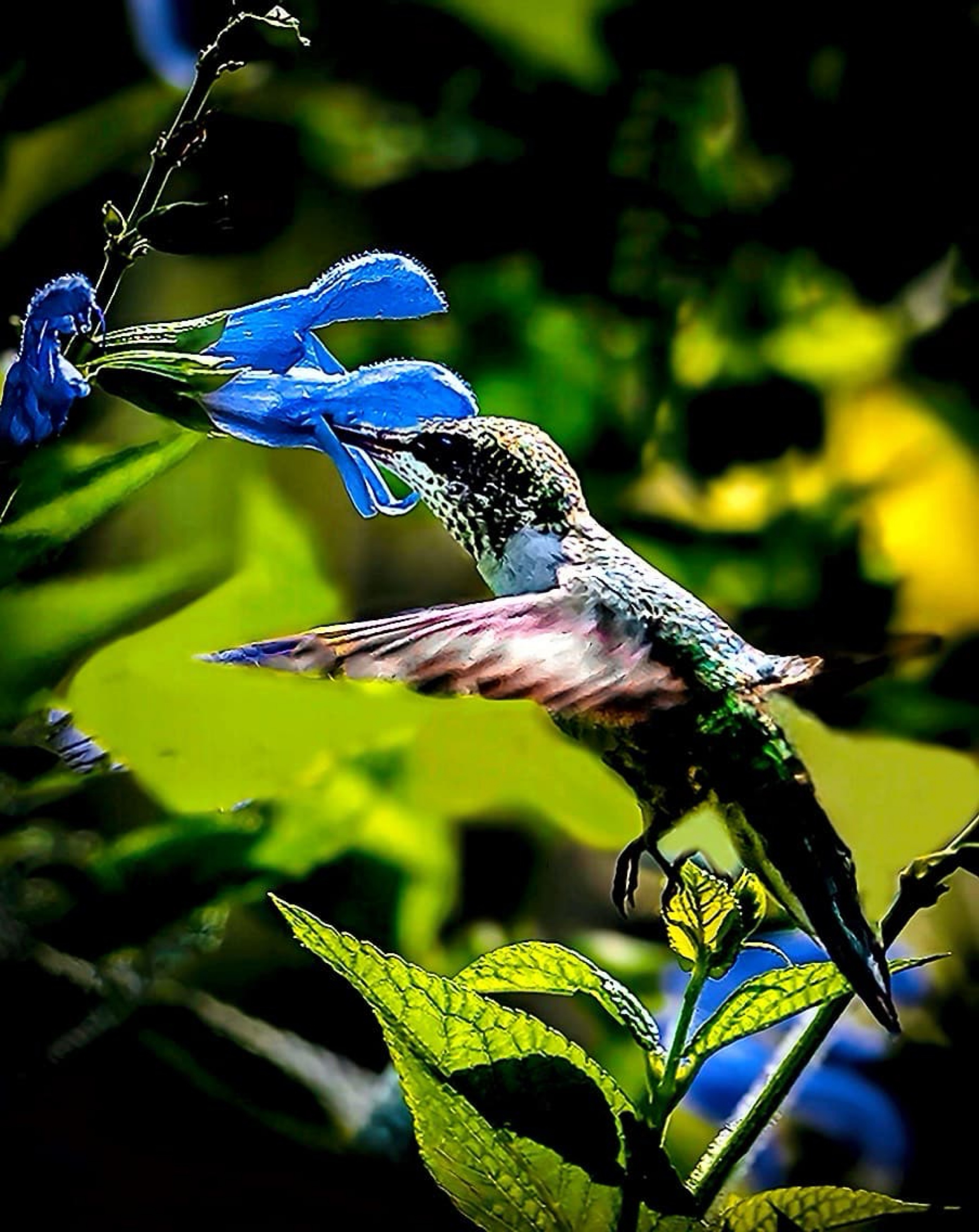
This photo was captured mid-hover, typically a challenging for photographers.
Red-Bellied Woodpecker
Perched on the fronds of a palm tree, this female Red-bellied Woodpecker shows the striking black-and-white pattern and vivid red nape of its neck that make the species distinctive. Red-bellies are adaptable and resourceful, they feed on a varied diet of insects, spiders, nuts, seeds, and fruit, and frequently visit backyard feeders. They love suet, peanuts, and sunflower seeds.
Their powerful bills, allow them to dig nesting cavities in dead trees, creating safe spaces for raising their young. They have remarkably long tongues, specially adapted for reaching into deep crevices, which allows them to extract hiding insects with impressive efficiency. Like this woodpecker Phil spotted palm trees are a favorite setting, since they are often found foraging palms and fruit-bearing trees.
Ruby-Throated Hummingbird
Suspended between flower and flight, this female Hummingbird hovers with precision as she reaches into a brilliant blossom. They are equipped with long, slender bills adapted for accessing nectar in tubular flowers. Phil’s photo demonstrates the elegant specialization that makes hummingbirds one of nature's most accomplished pollinators.
The birds offer fleeting moments that few observers ever see in such detail. Her blurred wings reveal the speed of flight. Hummingbirds beat their wings dozens of times per second, allowing them to hover in place while feeding, setting them apart all other birds.
Despite being among the smallest birds in the world, only a few grams, hummingbirds have extraordinary power and endurance.