The Year of the Impatiens
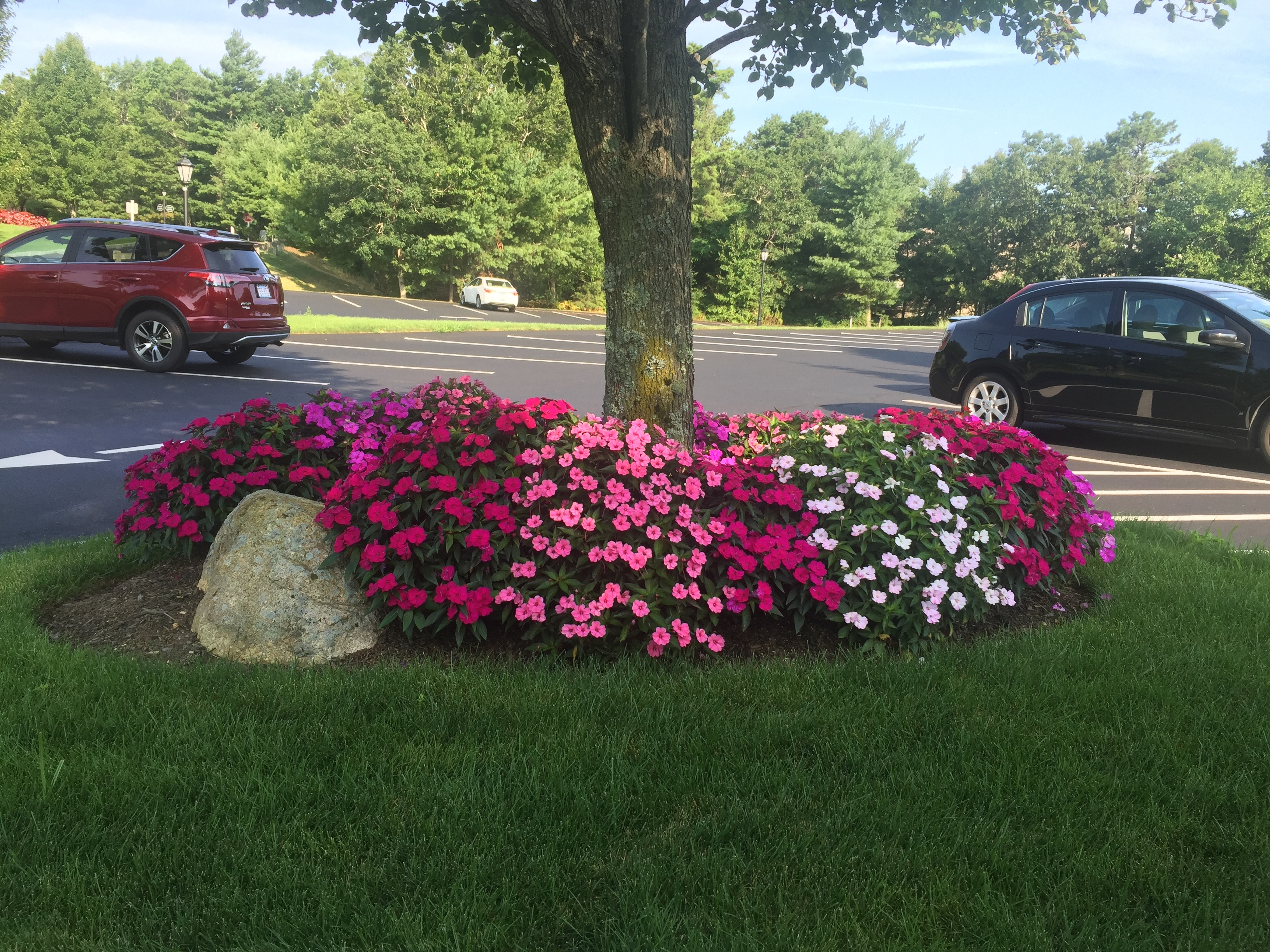
Every year, the National Garden Bureau (NGB) announces their “Year of the” for the categories of annual, perennial, bulb, edible, houseplant and flowering shrub. The NGB says their selection criteria for these plants is scored on how “popular, easy-to-grow, widely adaptable, genetically diverse and versatile” they are. This year’s annual category winner is a Fairway favorite, the impatiens.
Impatiens are widely planted in the landscape industry because of their vibrant color display. When installed, fertilized and watered properly, this annual can add a striking announcement to a community’s entrance and a homeowner’s walkway. It can brighten landscape beds where there may be less flowering shrubs, and is used to enhance a perennial garden, particularly when the perennial garden is newly installed to use as filler.
“I have enjoyed planting impatiens since the late eighties as they always put on a great show and respond well to regular watering and feeding,” says Jeanne Tennison, Fairway Landscaping’s Decor Director. These earlier varieties were more for shady areas, but their soft petals of white, pink and magenta hues would last from spring to the first frost, she says.
In the 1970s, Tennison notes that the New Guinea impatiens were introduced in the United States. “Now there was an impatiens’ variety which could tolerate early morning sun with dappled shade throughout the rest of the day. This created an opportunity to plant impatiens outside of strictly shady areas,” she explains. In the early 2000s, another variety, Sunpatiens, hit the landscape market as “a true sun-loving variety.” With this new variety came a wider selection of colors, says Tennison, and landscape beds, gardens and containers saw an explosion of designs and color from bluish pink to coral, red, neon, orange, magenta, blue and purple.
Perhaps the greatest asset of impatiens in designs, besides color and ease of maintenance, is their seasonal longevity. “They’re a true workhouse flower, says Tennison, “which adds color and enchanting beauty to any landscape.” It is no wonder the NGB awarded it first place this year.