Irrational Persistence: Denny “Zoomie” Boyce and the Long Walk North
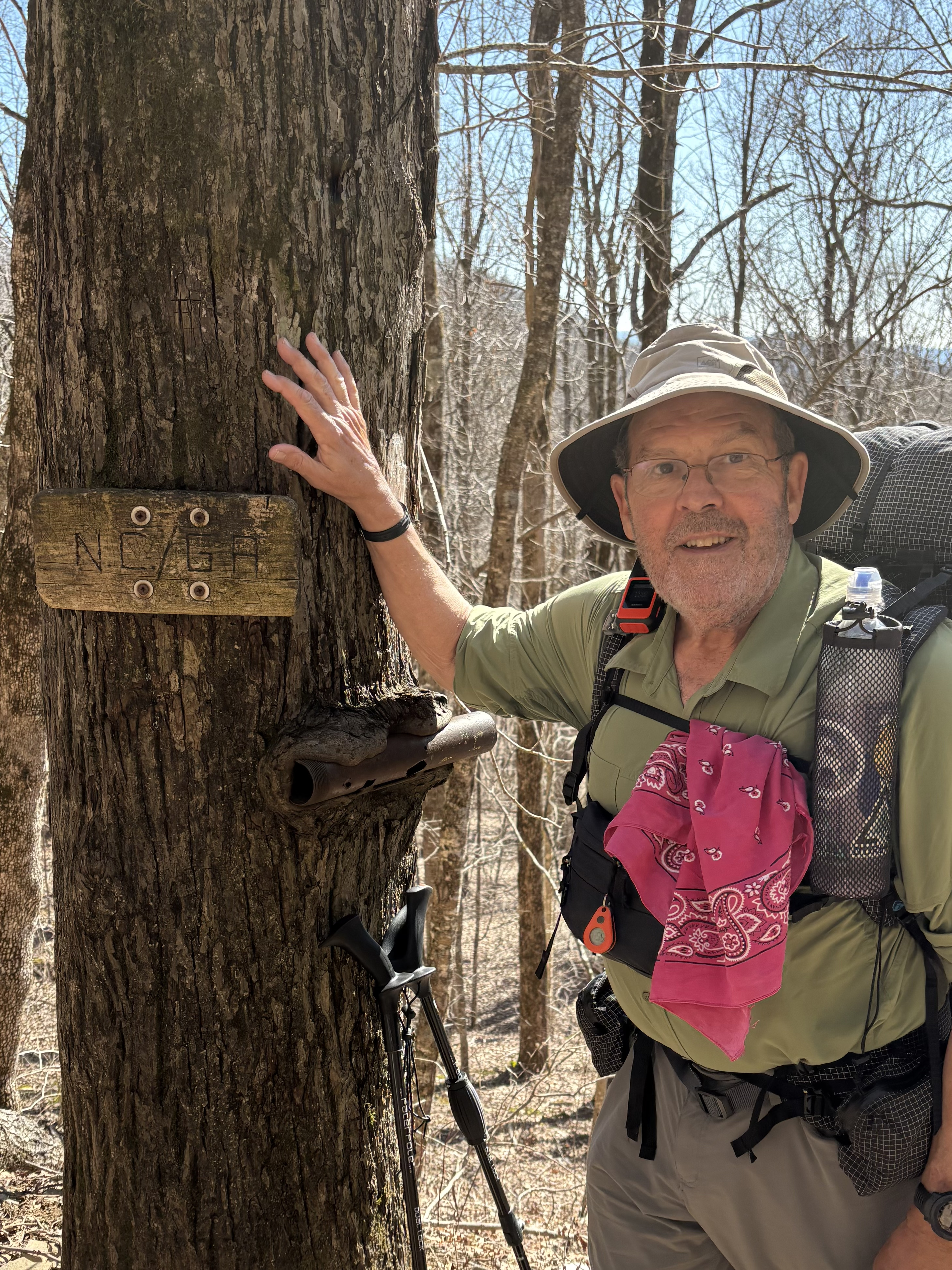
From the quiet streets of Kinderton Village in Bermuda Run, North Carolina, Denny Boyce set his sights on one of the longest and most demanding footpaths – no horses, bicycles or motor vehicles - in the world. It was a journey that began not with fanfare, but with a lifetime of preparation—and a fascination sparked decades earlier in the woods of Pennsylvania.
Boyce’s relationship with the Appalachian Trail began in a small Pennsylvania town where entertainment options were limited. You could play baseball, or you could be in Scouts. Boyce tried both. Baseball didn’t last long—he readily admits he was lousy at it—but scouting did. The outdoors, the discipline, and the emphasis on being prepared left a permanent mark.
Those early Scout hikes introduced him to the Appalachian Trail, a narrow footpath that would quietly shape his imagination for years to come.
A Trail Steeped in History
The Appalachian Trail—known simply as the AT—stretches nearly 2,200 miles from Springer Mountain, Georgia, to Mount Katahdin, Maine, crossing 14 states along the spine of the Appalachian Mountains. Conceived in the early 1920s and completed in 1937, it is one of the longest continuously marked hiking trails in the world. More than three million people step onto the trail each year, but only about 3000 attempt to thru-hike it in one continuous journey. Only 25% of these succeed.
The trail is marked by simple white blazes—two inches wide and six inches tall—painted on trees, rocks, and posts. It passes through eight national forests, six national parks, and dozens of trail towns that have grown accustomed to muddy boots and weary hikers.
Like many outdoor enthusiasts, Boyce didn’t rush into a thru-hike. Over the years, he hiked sections of the AT, learning its terrain and culture. Many hikers choose this approach, tackling a few weeks at a time during the summer. Hiking six - eight weeks per year allows some to complete the entire trail in about four years.
But in February 2025, Boyce decided to attempt the whole thing in one continuous northbound journey.
Preparing to Walk North
From his home in Kinderton Village, Boyce trained with intention. Three days a week he worked with a trainer on strength and cardio. He also underwent physical therapy for his knee and thigh, addressing injuries from earlier years. And he walked—day after day—building the kind of endurance that can’t be rushed.
When he stepped onto the trail at Springer Mountain, Georgia, winter still gripped the southern Appalachians. Starting that early meant colder temperatures, unpredictable weather, and fewer hikers—but it also allowed Boyce to ease into the trail at his own pace.
His backpack weighed about 30 pounds and contained everything he needed: a sleeping bag, tent, stove, four to five days of food, a liter of water, medications, and electronics. Rather than carrying large quantities of water, he relied on the AT’s abundant water sources, refilling along the way using a filtration system.
A support team worked behind the scenes. Food was dropped off at or mailed to hostels and shelters along the trail. Every ten days or so, Boyce took a rest day—known among hikers as a “zero day.” During some of these breaks, his wife, Debi or friends would meet him, offering encouragement, fresh supplies, and a welcome mental reset.
Finding His Pace
Boyce began cautiously, hiking just eight to nine miles a day. Starting too fast is a common mistake on the Appalachian Trail, one he had made before and was determined not to repeat. Over time, his body adapted. He worked his way up to 15–20 miles per day, averaging around 12 miles daily over the course of the hike.
He hiked alone, carrying the trail name “Zoomie,” a nod to his time at the Air Force Academy. Trail names are a long-standing tradition on the AT, often reflecting a hiker’s personality or past experiences.
Though solo, Boyce was never truly isolated. The Appalachian Trail fosters a unique social rhythm, where hikers leapfrog each other for weeks at a time, forming loose but meaningful connections.
The Gifts—and Risks—of the Trail
What Boyce loves most about hiking is the opportunity to witness the beauty of nature as he believes God created it: unexpected vistas around a bend, mist lifting from valleys, and long stretches of quiet reflection.
Wildlife encounters are a hallmark of the AT, and Boyce experienced many—deer, rabbits, a snake, and even a bear. Black bears are common along the trail but typically shy, more interested in food than confrontation.
His biggest concern wasn’t bears or storms, but ticks. Lyme disease is a serious risk on the AT, particularly in the Mid-Atlantic and New England. Boyce sprayed all of his gear to reduce the chance of tick exposure, a precaution many experienced hikers take seriously.
Of all the trail’s legendary sections, Boyce’s favorite is Maine’s 100-Mile Wilderness, a stretch with no road crossings for 100 miles. Despite its name, it is not entirely untamed—but it remains one of the most remote and humbling parts of the entire trail.
Where the Trail Turns Brutal
As hikers move north, the trail grows more difficult. New Hampshire’s White Mountains are widely regarded as the toughest section of the Appalachian Trail. Here, the path climbs above tree line, crosses exposed ridges, and requires scrambling over slick boulders that resemble rock climbing more than hiking.
The AT also passes directly over Mount Washington, infamous for having the worst weather in the United States, with hurricane-force winds and rapidly changing conditions.
It was in this region that Boyce’s journey took a dramatic and dangerous turn.
The Fall
On a rainy day, with rocks made slick by moisture, Boyce fell backward, striking his elbow, head, and hip. With 376 miles remaining to reach Mount Katahdin, he suffered a deep gash to his head that bled heavily.
Boyce was prepared. Years of scouting had taught him to think clearly in a crisis. Boyce remained calm and assessed his condition. He pulled out his Garmin satellite device and pressed the SOS button. Within ten minutes, a dispatcher called to confirm that a rescue squad had been alerted. It would take approximately two and a half hours to reach him.
While waiting, Boyce used his emergency thermal blanket, made a hot beverage, and stayed in contact with his son and daughter-in-law, both doctors. The greatest concern was the head injury and the possibility of shock.
True to the dispatcher’s estimate, the rescue squad arrived about two and a half hours later, prepared to carry him out if needed. With their assistance, Boyce was able to walk out himself. The exit was long and steep, taking six hours, with the final hour and a half in darkness using headlamps.
At the parking lot, 11 people, many of which were volunteers, were waiting to help. He was transported to the hospital in Littleton, New Hampshire, where doctors immediately performed a CT scan of his head, revealing no significant injury. A scan of his hip, however, showed a hairline fracture.
The injury required surgery, including pins and screws to stabilize the hip.
Not the End of the Trail
Boyce did not complete the Appalachian Trail—but he does not consider the journey unfinished. Hiking alone, he credits his preparation, experience, and calm decision-making for his survival.
He hasn’t ruled out attempting a thru-hike of the AT again. For now, his first goal is North Carolina’s Mountain-to-Sea Trail, stretching roughly 1,100 miles from the Great Smoky Mountains to the Outer Banks.
He also hopes to return to Scouting—this time with his grandson—passing on the lessons learned in the woods so many years ago.
When asked what advice he gives to anyone considering the Appalachian Trail, Boyce’s answer is simple:
“Do it.”
As one hiker famously put it, completing the Appalachian Trail requires irrational persistence. From Kinderton Village in Bermuda Run to the granite peaks of New England, Denny “Zoomie” Boyce has proven he has it—and the trail, in its own time, will be waiting.