Did You Know?
From a small farming community and county seat to one of Georgia's most sought-after cities, Alpharetta's story is one of resilience, growth, and a commitment to community.
The Story Behind the City We Call Home
Alpharetta may be known today for its booming tech industry and rapid growth, but its story began long before office parks and corporate headquarters arrived. In the 1830s, settlers were drawn to the area by fertile farmland and the opportunity to build a life in a growing community. What started as a small trading post officially became the City of Alpharetta in 1858 and later served as the seat of Milton County.
Like many Southern towns, Alpharetta faced its hardships. Residents endured a smallpox outbreak in 1863, the effects of the Civil War, and economic challenges during the Great Depression. In 1932, financial struggles led Milton County to merge with Fulton County, a move that helped secure the area's future.
For much of the 20th century, Alpharetta remained a quiet farming community. That began to change in the 1980s as businesses and new residents flocked to the area. Today, Alpharetta is home to more than 65,000 residents, has some of the best schools in the country, and is widely recognized as one of Georgia's most desirable places to live, work, and raise a family.
In celebration of America’s 250th anniversary, let’s take a look back at Alpharetta’s city history.
Milton County Courthouse (1858)
The courthouse stood as the center of civic life when Alpharetta became the seat of Milton County. It symbolized the town’s early role in governance and regional leadership.
The courthouse stood as the center of civic life when Alpharetta became the seat of Milton County. It symbolized the town’s early role in governance and regional leadership.
Colonel J.P. Brooke House (1880s)
Built by a prominent attorney and judge, this home reflected the growing importance of Alpharetta as a center of local government. Its presence marked a shift toward a more established and structured community.
Built by a prominent attorney and judge, this home reflected the growing importance of Alpharetta as a center of local government. Its presence marked a shift toward a more established and structured community.
Lewis-Manning House (1895)
This Queen Anne-style home was built during a time when Alpharetta was still a quiet, rural town. Over the decades, it housed prominent local families and remains a symbol of early residential life.
This Queen Anne-style home was built during a time when Alpharetta was still a quiet, rural town. Over the decades, it housed prominent local families and remains a symbol of early residential life.
Alpharetta Business District (Early 1900s)
Alpharetta’s early business district quickly became the heart of daily life, lined with general stores, banks, and gathering spots. After a devastating fire in 1902, many of these buildings were rebuilt in brick, shaping the downtown character we recognize today.
Alpharetta’s early business district quickly became the heart of daily life, lined with general stores, banks, and gathering spots. After a devastating fire in 1902, many of these buildings were rebuilt in brick, shaping the downtown character we recognize today.
Manning Mercantile (c. 1910)
General stores like this one were essential to daily life, serving as both marketplace and social hub. Locals gathered here not just for goods, but for conversation and connection.
General stores like this one were essential to daily life, serving as both marketplace and social hub. Locals gathered here not just for goods, but for conversation and connection.
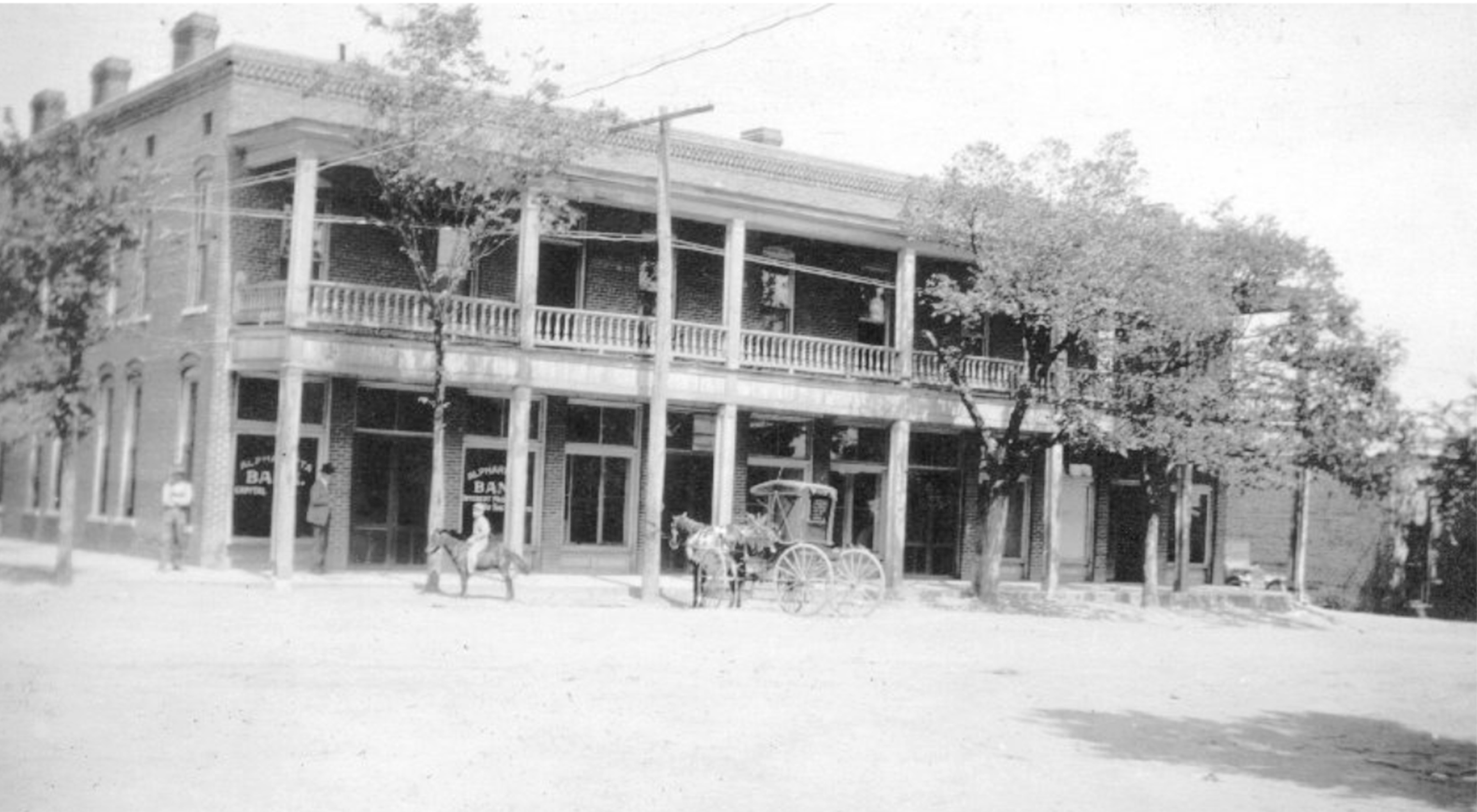
R.J. Webb Building / Alpharetta Hotel (1907)
This two-story brick building housed shops below and a hotel above, welcoming travelers passing through town. It was a key part of Alpharetta’s role as a stop between Atlanta and North Georgia.
This two-story brick building housed shops below and a hotel above, welcoming travelers passing through town. It was a key part of Alpharetta’s role as a stop between Atlanta and North Georgia.
Milton School (1922)
For decades, this school educated students across all grade levels under one roof. It became a cornerstone of the community, shaping generations of Alpharetta families.
For decades, this school educated students across all grade levels under one roof. It became a cornerstone of the community, shaping generations of Alpharetta families.