What Is Direct Primary Care—and Why Families Are Choosing It
By Dr. Eunice Jacob-Charly, D.O. Internal Medicine | Obesity & Metabolic Medicine Founder, Unique Health Now
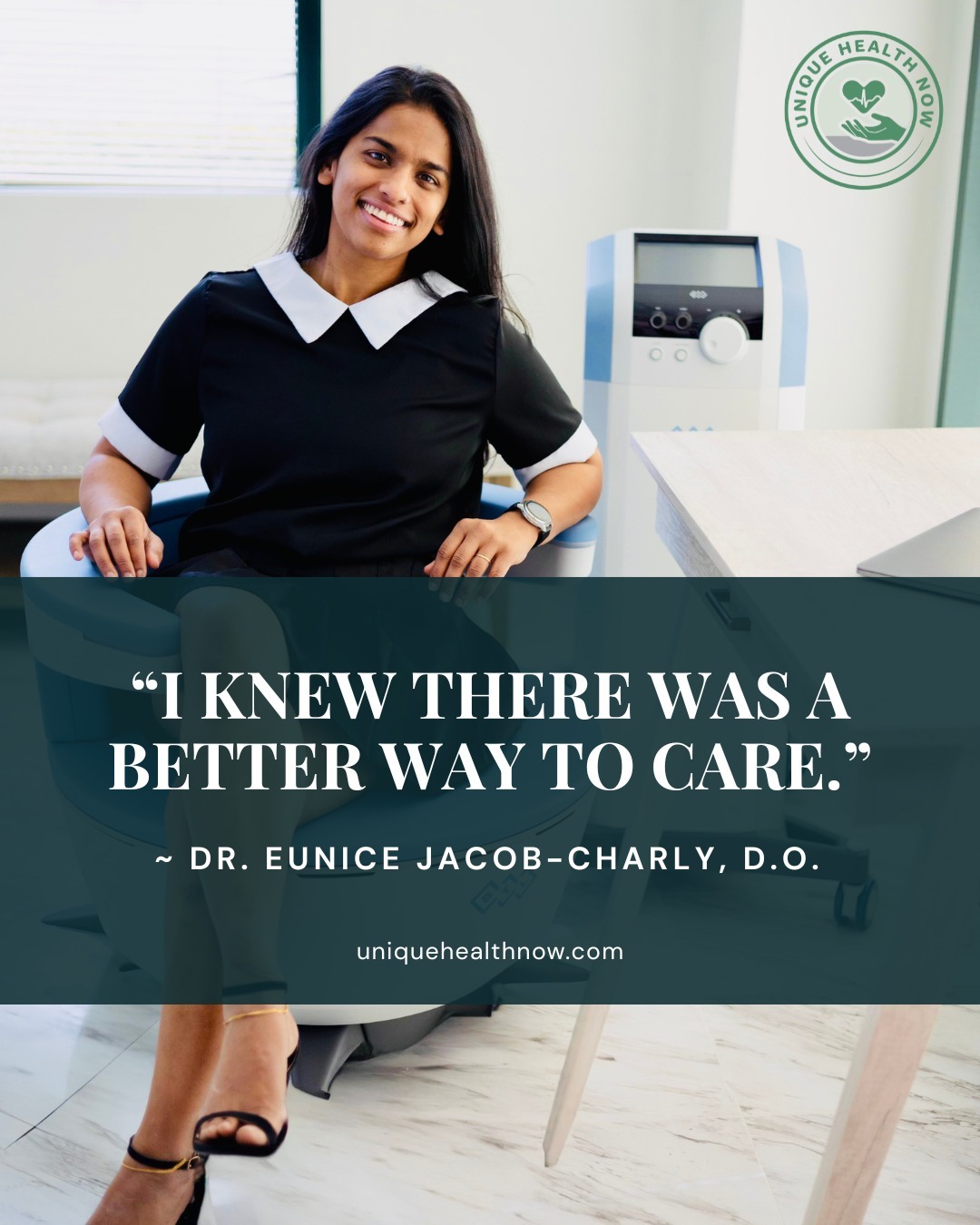
In today’s healthcare system, many patients feel rushed, unheard, and frustrated. Appointments are short, wait times are long, and care often feels reactive rather than preventative. As a physician, I’ve seen firsthand how this model leaves both patients and doctors dissatisfied. That’s why more families are turning to Direct Primary Care (DPC)—a relationship-based approach to medicine that prioritizes access, time, and personalized care.
What Is Direct Primary Care?
Direct Primary Care is a membership-based healthcare model in which patients pay a flat monthly fee directly to their physician. This fee typically covers most primary care services, including office visits, extended appointments, basic procedures, and direct communication with your doctor.
Because care is not routed through insurance for routine visits, there are no copays, no surprise bills, and no rushed appointments. Instead, the focus shifts back to thoughtful, comprehensive care built on an ongoing doctor–patient relationship.
Why It’s Often Called Concierge Medicine
The term “concierge medicine” is often used because this model emphasizes access, continuity, and personal attention—similar to how a concierge helps remove friction and anticipate needs. In healthcare, that translates to easier communication, unhurried visits, and proactive care rather than reactive problem-solving. At its core, concierge or Direct Primary Care is not about luxury. It’s about restoring time, trust, and accountability in the doctor–patient relationship.
More Time Means Better Care
In a traditional insurance-based practice, physicians may see 20 to 30 patients per day. In Direct Primary Care, patient panels are intentionally smaller, allowing for longer visits and deeper conversations.
This additional time makes it possible to address not only symptoms, but also lifestyle, stress, sleep, nutrition, movement, and long-term health goals. Thoughtful attention to these factors forms the foundation of long-term health optimization—what is often described as a practical, evidence-based approach to longevity. When patients feel heard and understood, outcomes improve.
Access That Actually Feels Like Access
One of the most common frustrations patients express is difficulty reaching their doctor or getting timely appointments. Direct Primary Care is designed to change that experience.
Patients typically have same- or next-day access, direct communication with their physician, and fewer barriers to care. This level of accessibility often prevents small concerns from becoming larger health issues.
A Strong Focus on Prevention and Longevity
Direct Primary Care is especially well-suited for preventive and proactive medicine. Rather than waiting for lab values to fall outside of “normal” ranges or for symptoms to worsen, this model emphasizes early risk identification, functional trends, and long-term health optimization. Physicians are able to focus on preventive health planning and risk stratification, provide closer follow-up for chronic disease management, and offer meaningful support for metabolic and weight health. Care also extends to maintaining muscle strength, mobility, and overall function throughout the lifespan, while addressing both women’s and men’s health needs as they evolve through different life stages. Preventive and longevity-focused care works best when there is time, continuity, and a trusted physician–patient relationship—all of which are central to the Direct Primary Care model.
How Insurance Fits In
Direct Primary Care is not insurance, and it does not replace it. Many patients pair DPC with a high-deductible insurance plan or health-sharing plan to cover hospitalizations, emergencies, or specialty care.
This approach often reduces overall healthcare costs while significantly improving the day-to-day care experience.
Who Is Direct Primary Care For?
Direct Primary Care is ideal for busy professionals who want convenient, accessible healthcare without long waits, as well as families who value continuity and strong, relationship-based medicine. It’s also a great fit for patients managing chronic conditions who benefit from closer follow-up and ongoing support. For those focused on prevention, longevity, and whole-person health, this model offers a proactive and personalized approach to care.
A Return to the Heart of Medicine
At its core, Direct Primary Care is about restoring what many patients feel is missing in healthcare today: time, trust, and connection. It allows physicians to practice medicine thoughtfully—and patients to feel supported, informed, and empowered in their health.
Healthcare doesn’t have to feel complicated or impersonal. Sometimes, the most meaningful innovation is simply getting back to basics.