Portugal!
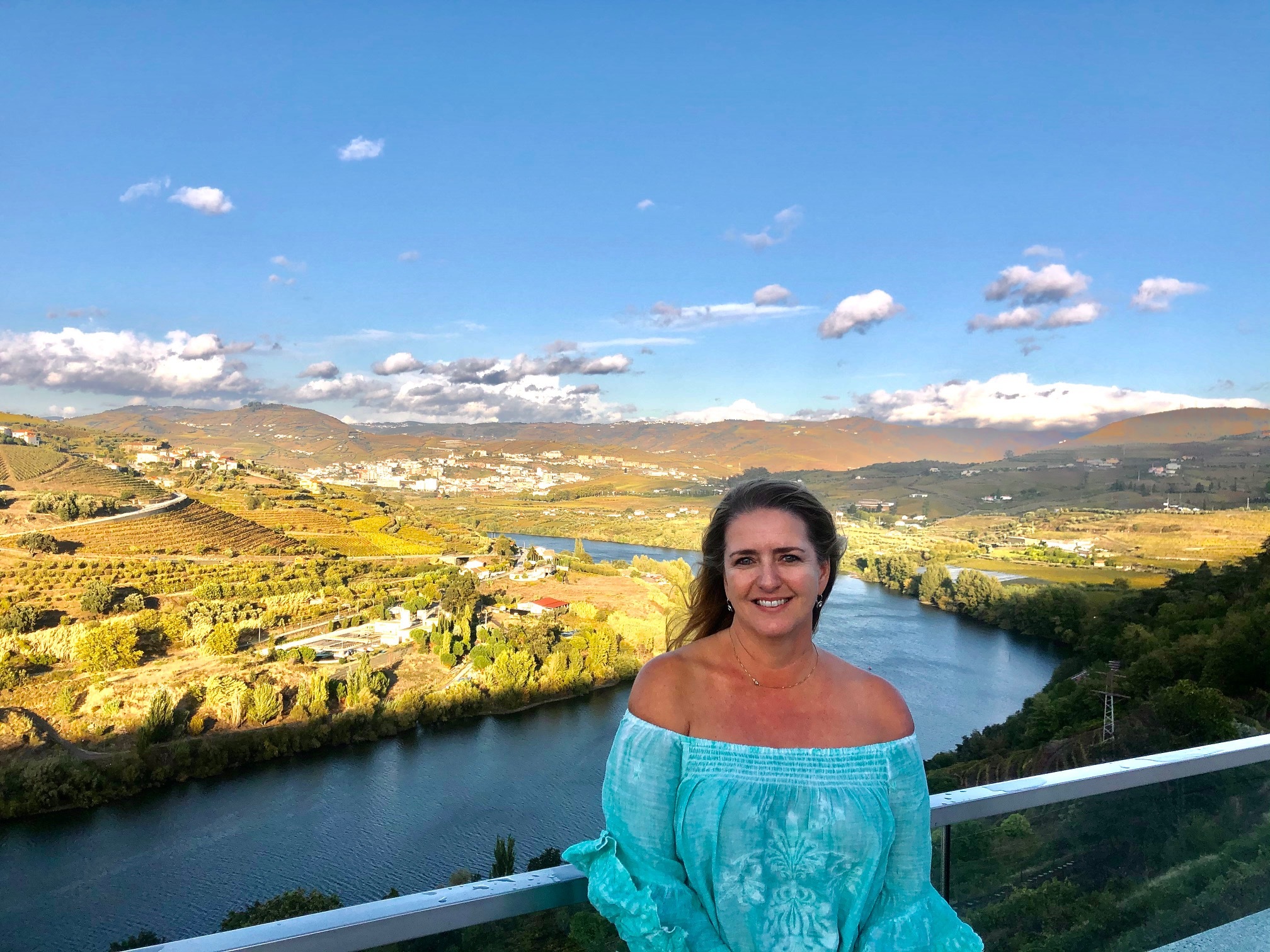
The Duoro Valley
Portugal. It wasn't a place I had dreamt about visiting but having done so twice now in three years, it's a place that calls to my soul to return to. Again and again.
What did I know about Portugal? Not very much. I'd heard of Lisbon, the capital city and the coastal town of Nazarre because of their incredible surf break and big waves. But aside from that I really didn't know anything about it.
Well, that was about to change. I and two other girlfriends decided to go. We usually prefer to travel in September/October months for reduced crowds, less heat and reduced costs.
We started in the Capital of Lisbon. Opting for a wonderful Airbnb 3-bedroom apartment in the Chiado district, which was within walking distance of many attractions and had a thriving restaurant/bar scene. Additionally, I stayed at the charming Heritage Avenida Liberdade Hotel in the main square. Many hotels have rooftop bars and terraces.
Our strategy in accessing the many cultural/sightseeing spots involved lots of walking, and the open-aired tuk-tuks! We opted for tuk tuks to take us to the top of the São Jorge Castle at sunset, as well as to see the Belem Tower and Jeronimos Monastary, both representing the Portuguese Age of Discovery. A quick stop to the viewing platform from the top of Padrão dos Descobrimentos gave us wonderful views of Lisbon. Strolling the streets you can find yourself at The Praca do Comercio plaza close to the Elevador de Santa Justa. Wander the streets and relish in the history of Lisbon.
You can't mention Lisbon without mentioning Fado music. The lyrics may be entirely in Portuguese, but the soulful music comes through and you feel the pain, suffering and love. Fado means fate, destiny, but often speaking of Fado is also speaking of longing. Find a local Fado bar and pull up a seat. The dinner/fado show at Maria da Mouraria was a highlight of our trip.
Not only does a new country awaken you to a different culture, history and more, but you can also experience it through the food and drink. Ginjinha is as iconic in Lisbon as is the pasteis de nata and as much a cultural fixture as Portugal's blue and white azulejo tiles decorating many building facades. Youcan take in many street artists' works from the likes of: Vhils and Bordalo II. The latter uses trash and discarded items to create 3-D works. We found some of his work in Lisbon and Porto. A favorite restaurant we discovered was Agulha no Palheiro in the Alfama district, which was a tiny spot with truly delicious flavors at an incredibly reasonable price. Another great find was Restaurante A Baiuca in the Bairro Alto area. A gem of reasonably priced restaurants owned by generations, with a great fado bar just around the corner.
We planned a day trip to the magical town of Sintra to see the Pena Palace, Castelo dos Mouros (Moors Castle) and Quinta da Regaleria. This is the fairy-tale-like estate and UNESCO World Heritage Site located near Sintra’s historic center. It is known for its beautiful architecture, landscaped gardens, and the eerie Initiation Wells. We ended the afternoon with lunch near the seaside town of Cascais at Restaurante O Faroleiro.
There are a number of stops you can do on your way to the port wine region of the Duora Valley. The picturesque medieval town of Obidos is charming. We stayed just outside the walled city at the Library Man Hotel. A charming boutique hotel whose walls are filled with books upon books. A surprising stop along the way was Fatima. Fátima is home to the Sanctuary of Fátima, a Catholic pilgrimage site. The first time I was there was on October 12th and the 2nd time was on October 13th, the anniversary of the miracle of "Our Lady of Fatima". It was a very spiritual place and an experience I won't ever forget.
The Duora valley is a wine-lovers dream, filled with terraced vineyards, beautiful scenery and flowing through the Duoro river making it's way to Porto. We chose the Delfim Duoro for our overnight in Porto. We had drinks prior to dinner at the beautiful hotel Six Senses followed by a riverside dinner at Chef Rui Paula's Michelin Restaurant: DOC. This was followed 2 nights later in Porto at his other culinary spot: DOP. The wineries are situated on terraces up and down the Duoro river valley. You can take a boat wine tasting as well. We chose Quintade Pacheca, followed by lunch at Aneto & Table, The Nossa Senhora dos Remedios church in Lamego. 700 steps to the top. What a day! Time to make our way to Porto.
Porto was a delight to stroll the streets, climb the steps to the top of the church, and discover the blue and white tiles decorated through out. The train station was a delight. You can walk along the river and dine at numerous restaurants. There is a footpath on the bridge to Vila Nova de Gaia, situated across the Douro River from Porto, you will find more than 60 historic port houses. Despite its name, the port wine industry is not housed in Porto but in Vila Nova de Gaia commonly referred to as “Gaia” by locals.
Portugal is a magical place full of mystery, history, and discovery. The people in Portugal were so kind and welcoming. The towns are charming. The food and wine are delicious and reasonably priced. It is truly a wonderful country to be discovered and to return to again and again.