The Copperhead Snake: A Poisonous Beauty
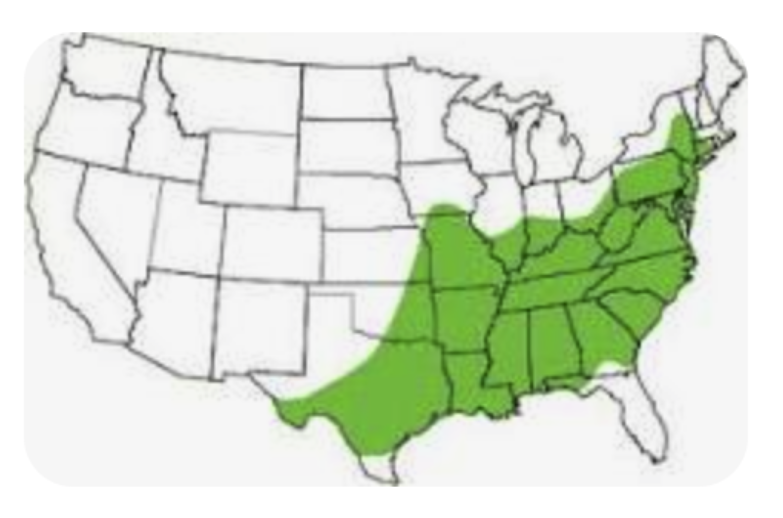
Figure 3: Distribution of the eastern copperhead in the United States.
Six venomous snakes slither around the Carolinas: three rattlesnakes (eastern diamondback, timber and pigmy), the eastern coral snake, the cottonmouth and the copperhead. Few inhabit our Cliffs area, save for the copperhead and cottonmouth, both abundant. The cottonmouth, a water moccasin, favors wet locales. Thus, at the Cliffs, the copperhead, with its coppery head, is the most likely poisonous snake encounter.
The copperhead has attractive and distinctive dark brown, hourglass-shaped bands overlaid on a light reddish brown or brown/gray background (Figure 1). Adults have a broad head that is wider than the neck, with a thick body type. These serpents, like others containing venom, possess thermal sensory organs on each side of their head, between their optic and nasal areas. They grow to a typical length of 24-36 inches, with the females being longer than the males. Juveniles are like adults but have a bright yellow to greenish tail tip (Figure 2), which attracts frogs and lizards. This fades by 3-4 years of age. Both have vertical eye slits and can inject venom. You should avoid getting close enough to see the eye slits.
Place Here.
Figure 1. Adult copperhead snake Agkistrodon contortrix.
Place Here.
Figure 2. Baby copperhead snake with bright yellow tail.
Copperheads are ubiquitous in the eastern United States (Figure 3). You are most likely to encounter one in deciduous forests, mixed woodlands, or dry rocky hillsides. Its distinctive markings provide excellent camouflage against leaf litter or twigs on the forest floor. It may also occupy rock outcroppings, ledges, construction litter, or backyards. Residents of our yard live in a railroad tie wall and often bask in open areas (Figures 4 and 5). Copperheads also sometimes inhabit low-lying, swampy regions. In the winter, it hibernates in dens or crevices, often with other snakes.
Place Here.
Figure 3: Distribution of the eastern copperhead in the United States.
Place Here.
Figure 4: Copperhead living in our railroad tie wall.
Place Here.
Figure 5: Two copperheads surveying the world from a railroad tie wall.
Males reach sexual maturity after 2 years; females by 3 years. The average life span in the wild is 6-8 years. Breeding occurs in late summer, but not every year. Sometimes, females produce young for several years and then do not breed at all for a time. Males sometimes fight for access to females before mating. Young are born live at about 8 inches in total length. The typical litter is 4-7, but can vary from 1 to 20. The parents provide no care after the babies are born, and females can store sperm for up to a year. Asexual parthenogenesis can also produce young. This process can lead to genome-wide homozygosity, expression of deleterious recessive genes and to developmental failure.
The copperhead is an ambush predator. This means it finds a comfortable spot and waits for suitable prey to saunter by. It may stay in the same place for days and may only eat one meal every three weeks. Suitable prey comprises amphibians, lizards, smaller snakes, small mammals, birds and insects. Snakes are part of a healthy ecosystem because they eat mice, voles, caterpillars, cicadas, millipedes and other creepy things. Sight, odor, and heat detection are used to locate prey. Gravid females fast. Owls, hawks, opossums, bullfrogs and other snakes may prey on copperheads, but researchers haven’t studied this carefully.
The copperhead snake avoids confrontation with human beings. If you see one, just back off. It has a tendency to freeze rather than slither away. Most bites happen when someone accidentally steps on or touches the well-camouflaged snake. If it senses danger, it can vibrate its tail as a warning, similar to a rattlesnake. Bites from baby snakes can be just as severe or more toxic than from adults because they are not skilled in how much venom to inject.
Copperhead venom is hemotoxic, but its potency is less than that of most pit vipers. Hemotoxic means the venom destroys red blood cells, disrupts blood clotting and can cause organ degeneration and generalized tissue damage. Besides killing its prey, venom contains enzymes and other proteins that aid in digestion. The venom breaks down protein near the bite, making prey easier to digest. In contrast, the venom of some rattlesnakes and other venomous snakes is neurotoxic or, sometimes, both neurotoxic and hemotoxic. Neurotoxins are more deadly because they attack the nervous system and can cause paralysis, affecting vital functions like breathing.
A well-camouflaged copperhead on a flagstone walkway bit Mary Elder, a Glassy resident, about 10 years ago. The bite was on her ankle, and she experienced painful throbbing and swelling that travelled from her ankle to her knee by the time she got to the emergency room. Bite symptoms in humans may include severe nausea, disorientation, tingling, throbbing, swelling, and headache. Complicating things, the hospital requested that she bring in the snake, which was a challenge for the first responders. The ambulance transported her and the snake to the hospital.
Doctors monitored Mary’s clotting factors overnight in the hospital to determine if she needed antivenom. No antiserum was required, but it took about a week for the swelling to go down. Prior to this experience, Mary was so scared of snakes, she avoided the snake house at the zoo. Having survived a copperhead bite cured her of this fear, but she is still very cautious about working in the garden and worries about her dog being bitten.
If the snake bite doesn't harm you, the cost of the antivenom at the hospital might! Cost depends on the type of snake, the amount of antivenom, and the healthcare provider. Usually, patients need multiple vials, and a single vial of antiserum costs between $ 2,000 and $14,000. Mary Elder recalls that had she needed the antiserum, it would have cost her $25,000. The high cost is because of preparation (milking venom from live snakes, injecting venom into animals to raise antibodies, etc.) and the hospital's markup. You may want to check whether your insurance covers it!
In North and South Carolina, the copperhead accounts for the most bites but the fewest deaths in healthy adults. However, vulnerable people or pets could experience severe reactions. Sometimes the bite is a dry bite with no or little venom injected. This may have been Mary Elder’s situation. Regardless, any bite warrants an immediate trip to an emergency room, not an urgent care; urgent care facilities may not have the needed antivenom. It is said that a copperhead bite won't kill you, but it will make you wish it had because the bite pain is excruciating. If you get bitten, just forget all that stuff we learned as scouts years ago. Ice won't help, sucking out the venom doesn't work, and applying a tourniquet if not done correctly might cost you a limb. Photograph the serpent and then proceed to the closest ER. Even the fangs of a dead pit viper can deliver venom in amounts that necessitate antivenom.
If you have a dislike of snakes, you may not recognize their inherent beauty. The copperhead, a venomous species, showcases striking hourglass patterns on its skin. It possesses an impressive ability to blend into its surroundings and tends to bite only when it feels threatened, such as when someone inadvertently steps on it. The copperhead is an important contributor to a balanced ecosystem, assisting in the control of populations of mice, insects, and other small creatures. While it's advisable to exercise caution and avoid any potential bites, it's also essential to remember that we share this space with them. Understanding and respecting these snakes is part of the rich tapestry of life at the Cliffs.