Stewardship of a Place
Preserving the Stories That Shape Sullivan's Island
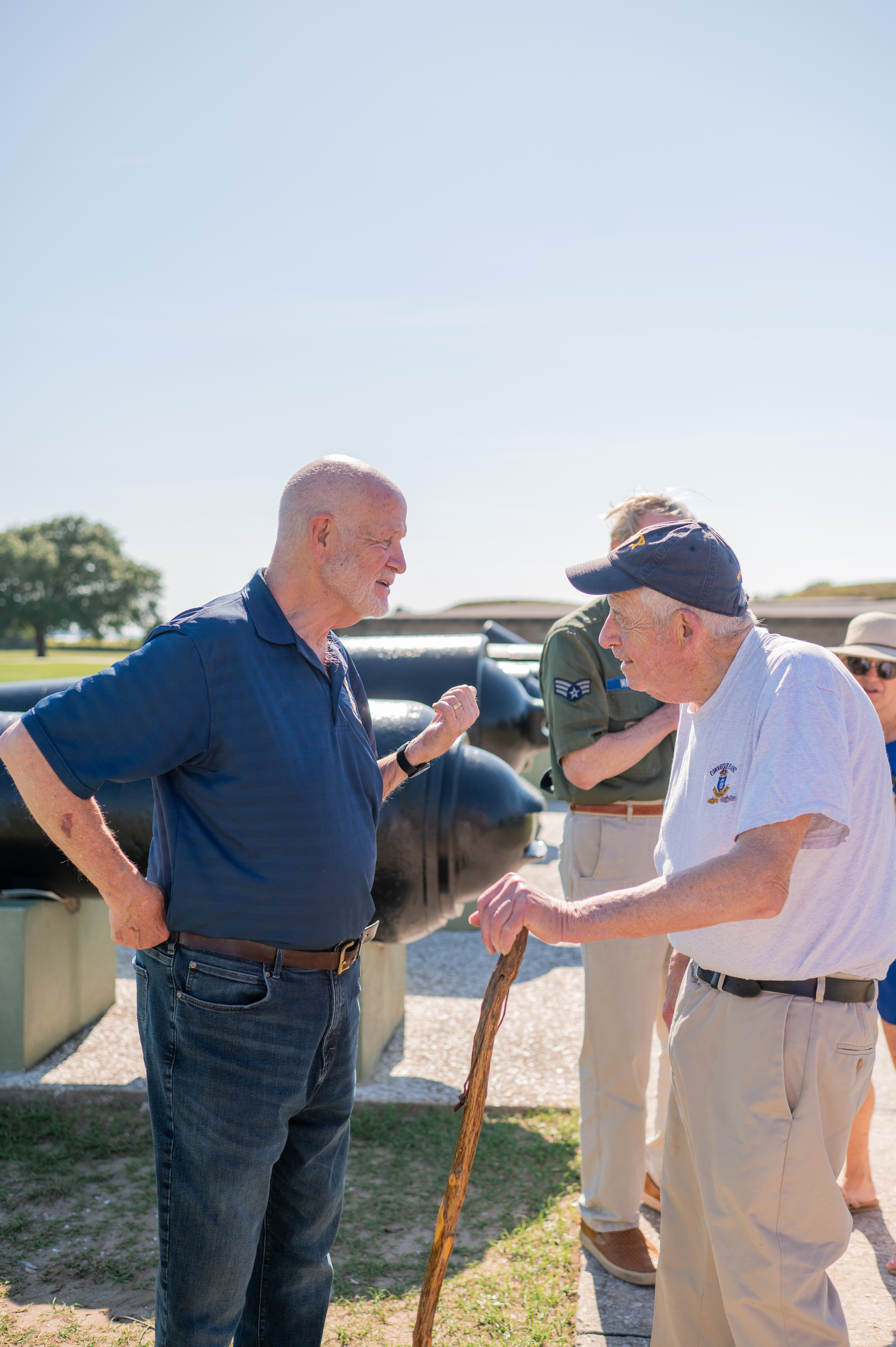
As America prepares to celebrate its 250th birthday, communities across the country are reflecting on the people, places, and stories that have shaped our nation. On Sullivan's Island, few people have devoted more time and energy to preserving those stories than Mike Walsh.
A retired orthopedic surgeon, president of the Battery Gadsden Cultural Center, volunteer at Fort Moultrie, board member of Friends of Charleston National Parks, and member of the SC250 Charleston Steering Committee, Walsh has spent much of his retirement helping ensure that the Island's rich history is not forgotten.
But for Walsh, preservation is about far more than protecting old buildings or marking important dates.
It is about stewardship.
"To me, stewardship is taking care of and preserving something you value," Walsh says. "But caring isn't enough. Stewardship requires action."
That philosophy has guided his work for more than a decade. Since retiring from medicine in 2015, Walsh has devoted countless hours to Fort Moultrie, Battery Gadsden, oral history projects, educational programs, and preservation efforts throughout the Charleston area.
When asked why he feels called to preserve the history of Sullivan's Island, his answer comes quickly.
"How can anyone live here and not feel called to preserve it?"
For Walsh, history is not confined to museums, plaques, or textbooks. It surrounds us every day.
From the first European settlement in the Charleston area to the Battle of Sullivan's Island, from Fort Moultrie's role in defending Charleston Harbor to generations of Islanders who have built their lives here, the past remains woven into the fabric of the community.
"Our history drips from every tree," he says.
It is difficult to walk the Island without encountering reminders of the people and events that shaped both South Carolina and the nation. Revolutionary War heroes, Civil War leaders, presidents, soldiers, writers, and generations of local families have all left their mark on this small stretch of land.
Yet Walsh believes the most important stories are often the most personal ones.
While forts, monuments, and historic structures provide visible connections to the past, it is the memories of those who lived here that truly bring history to life.
One of the initiatives he is most proud of is the Battery Gadsden Cultural Center's Oral History Project, which captures and preserves conversations with longtime Sullivan's Island residents. Those interviews have been archived through the Lowcountry Digital Library at the College of Charleston, ensuring future generations can hear firsthand accounts of Island life from the people who experienced it.
Over the years, Walsh has spent countless hours listening to and documenting the stories of Islanders whose lives are woven into the fabric of this community. The project includes conversations with the late Roy Williams, often regarded as the Island's historian; Father Lawrence McInerny, whose family's connection to Sullivan's Island dates back to 1848; Hal Coste, whose family history intersects with some of the earliest chapters of the Civil War; Bryan Rowell, a World War II veteran whose destroyer survived kamikaze attacks; Jeannie Truesdale Heath, whose father served as the first bridge keeper on the Ben Sawyer Bridge; and Rovena Owens, whose African American roots on the Island stretch back generations. Their stories preserve not only historical events, but the lived experiences, traditions, challenges, and memories that shaped Sullivan's Island.
For Walsh, these conversations reveal something no monument ever can.
"Oral histories bring out the human element," he explains. "Buildings and monuments can tell a story, but they can't tell the personal experiences of the people who lived through those events."
Through those interviews, he has heard memories of life on Sullivan's Island during World War II, stories passed down through generations of Island families, firsthand accounts of military service, and reflections on defining moments such as Hurricane Hugo.
Each story adds another thread to the larger fabric of the Island's history.
As communities across the nation wrestle with how best to interpret and remember the past, Walsh believes preservation requires honesty.
History, he notes, is not always comfortable.
Every community has chapters worth celebrating and chapters that require reflection. Preserving history means acknowledging both.
"We shouldn't sweep history under the rug," Walsh says. "We learn through discussion, research, and understanding. That's how we preserve history with integrity."
That perspective feels especially relevant as America approaches its semiquincentennial celebration. While anniversaries often encourage reflection on triumphs and achievements, Walsh believes they also provide an opportunity to examine the full story of who we are and how we arrived here.
For him, patriotism and preservation are closely connected.
His work has deepened his appreciation for the sacrifices, courage, and resilience that helped shape the nation. At the same time, it has reinforced the importance of understanding history in all its complexity.
Nowhere is that more evident than on Sullivan's Island itself.
The Island played a pivotal role in the American Revolution, yet many visitors remain unaware of the significance of the Battle of Sullivan's Island on June 28, 1776. Walsh often reminds visitors that history could have unfolded very differently had the outcome of that battle changed.
As John Hancock famously remarked upon hearing news of the American victory, "Posterity will be astonished by this most stunning victory."
Yet while Walsh appreciates the Island's role in shaping the American story, he remains focused on something closer to home.
The responsibility of passing these stories forward.
Stewardship, after all, is not simply about preserving the past.
It is about ensuring that future generations understand why it matters.
As Islanders gather this year to celebrate America's 250th anniversary, Walsh hopes residents take time to look beyond the beaches, homes, and familiar landmarks that define daily life here.
He hopes they see the layers of history beneath them.
He hopes they ask questions.
He hopes they become curious.
Most of all, he hopes they recognize that every generation plays a role in preserving the stories entrusted to them.
When visitors leave Battery Gadsden or Fort Moultrie, Walsh says he hopes they carry away a sense of wonder.
"Curiosity. Awe. A desire to learn more. A deep appreciation for bravery and sacrifice. And a burning interest in the history of this marvelous Island we call home."
In many ways, that may be the very definition of stewardship.
Not simply remembering the past.
Making sure its stories continue to be told.