A Woman of No Importance by Sonia Purnell
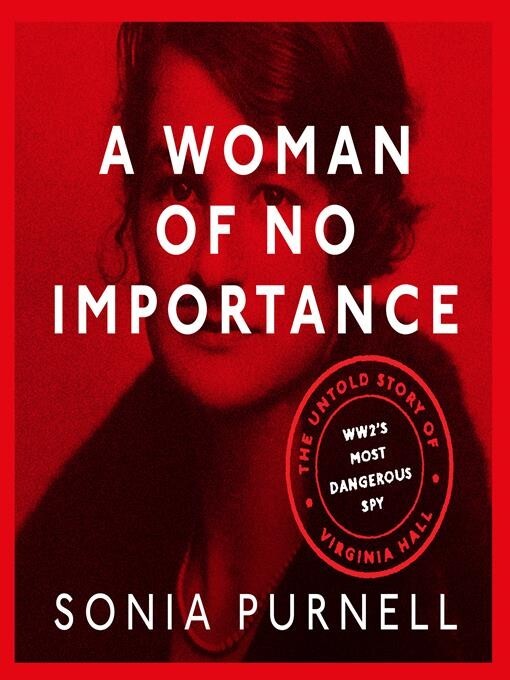
In 1942 the Gestapo described an American woman as “the most dangerous of all Allied spies. We must find and destroy her.”
Born in 1906 into the gentrified social strata, Virginia Hall’s life course should have involved marriage and high society affairs. Yet with a gift for languages and a fierce sense of duty, she applied for and was rejected from the U.S. Foreign Service due to her gender and disability, a prosthetic leg resulting from a hunting accident at age 27. She didn’t let this stop her. With ambulance experience and posing as an American journalist, she talked her way into the British spy organization Winston Churchill called his “ministry of ungentlemanly warfare.” Long before the United States entered World War II, Hall became the first woman to deploy to occupied France.
Purnell’s A Woman of No Importance reveals the astonishing true story of a brilliant and audacious spy whose contributions to the Allied victory have been largely forgotten. Defying convention and regulation, Hall built an underground network so effective that she became known as the “Madonna of the Resistance.” She organized a vast network of agents that included French prostitutes, police, and military personnel who provided information on German troop movements. She organized safe houses, coordinated the escapes of prisoners of war, provided cover for telegraph operatives, and commissioned supply drops—all while evading capture long beyond the expected duration of this type of work. Her face appeared on WANTED posters across Europe.
When her cover was ultimately blown, she escaped by hiking over the Pyrenees—an treacherous feat given her prosthetic leg. Yet Hall refused to rest. Declaring she had “more lives to save,” she returned to France to head sabotage operations supporting the D-Day landings.
As one of Britain’s earliest Special Operations Executive agents in France, Hall helped lay the groundwork for the organized Resistance, often considered the forerunner of America’s OSS and ultimately the CIA.
Though richly detailed—sometimes almost overwhelmingly so—Purnell’s biography is far from dry. It is a gripping, meticulously researched portrait of a woman who shattered barriers and defied expectations in both wartime espionage and a male-dominated world. Despite being the only civilian woman to be honored with the Distinguished Service Cross and have a CIA training facility named after her, Virginia Hall’s legacy remains inexplicably obscure. A Woman of No Importance restores her to her rightful place in history.