Rooted in Memory, Courage, and the Women Who Came Before Us
In 2015, during a move, I came across something that would change the course of my life. Tucked away in a box of photographs was a ten-page, typewritten memoir my Irish American Catholic grandmother, Helen, had written for her grandchildren back in the early 1970s. The pages were yellowed and fragile, a bit frayed around the edges, but her voice on them felt alive. I sat down on the stairs and read the entire thing in one sitting, unable to look away.
She wrote about losing her grandmother as a young girl, the instability that followed, and the struggle of growing up in a world that was not always gentle with women. Yet threaded through the loss and adversity was something remarkably inspiring: courage, humor, grit, faith, and the unwavering will to keep going.
Her story was not long, but it was full. And I knew immediately it needed to be tended to, expanded, and honored. With years of teaching behind me and a deep commitment to lifelong learning, I stepped into a decade of research and writing that became my debut novel, The Girl from Magnolia Street.
Set in upstate New York during the suffrage movement of the 1910s, The Girl from Magnolia Street follows a young Irish Catholic girl, also named Helen, who becomes the ward of her uncle, a well-meaning but controlling priest, after her grandmother dies. Just when her world seems to be closing in, she encounters a group of bold, forward-thinking suffragists. Through them, Helen begins to witness the clash between tradition and change—the old rules of her upbringing and the new possibilities these women embody. Their independence and convictions offer her a version of womanhood she has never encountered. She becomes more aware of how adults use power, how girls are judged before they’re truly known, and how easily a young woman’s sense of worth can be shaped or distorted by the people around her.
The line that opens my novel, It is through the shelter of each other that we survive, became my compass as I wrote. The women who surround Helen each offer a different kind of shelter: wisdom, defiance, honesty, and the courage to imagine life beyond the limitations placed on them. Their influence shapes her far more than the rules she has been raised under, reminding her—and all of us—how deeply we depend on those who walk beside us.
Women in America did not yet have the right to vote during Helen’s childhood, and it wasn’t until 1920 that the 19th Amendment granted that long-fought-for right. I often think about those women, the ones whose names we know and the many more we don’t. Their courage echoes through every chapter of The Girl from Magnolia Street. The novel is dedicated not only to my grandmother Helen, whose locket I wear at every book event, but also to every woman who dared to speak when silence was expected, who dreamed when dreaming was discouraged, and who rose when the world tried to weigh her down. While it’s categorized as women’s historical fiction for ages thirteen and up, I’ve been pleasantly surprised to hear from several men who have read it and resonated with it enough to send thoughtful five-star reviews.
Historical fiction gives us a way to look back through the lens of storytelling in order to understand ourselves more fully, and Helen’s journey is no exception. When readers finish The Girl from Magnolia Street, I hope they walk away remembering that we are stronger together, that the women who came before us are never truly gone, and that the voice we carry is a gift someone once fought for. And to the Southbridge community, at my book launch last November, you filled the room, lifted this story, and carried all 80 books home with you—some to keep, many to give. My husband and I were deeply moved by your support and feel grateful every day to call Southbridge home. A heartfelt thank you to you all.
About the Author
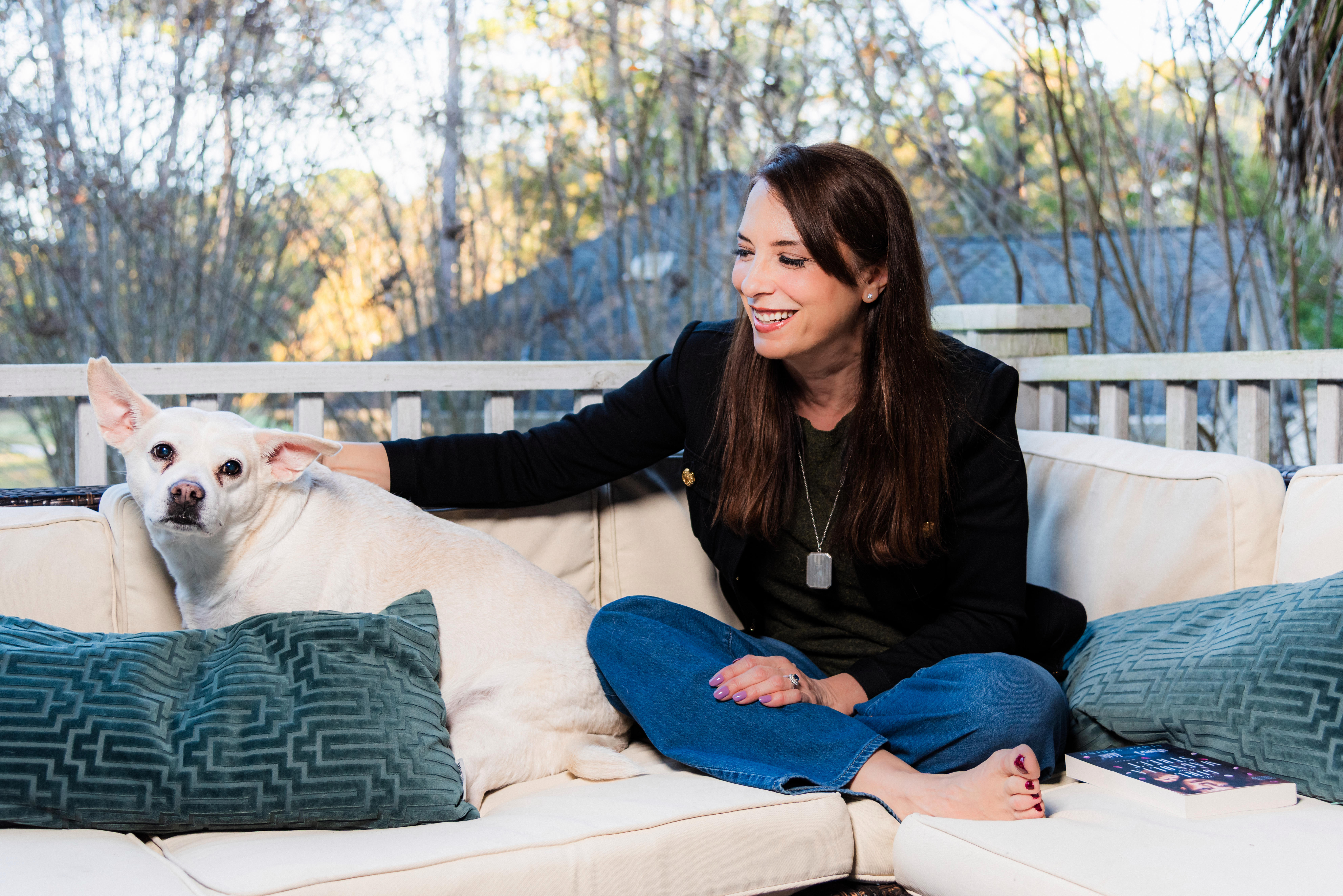
Aimee Spring is the author of the debut historical novel The Girl from Magnolia Street and the award-winning children’s book The Little Butterfly: For Young Hearts Who Have Experienced Loss. After living in Vermont and New York her entire life, she now calls Southbridge home with her husband, Rob, and their dog, Snow. She is grateful to have her grown children, Hollee and Bray, nearby. Outside of writing, Aimee loves exploring local culture, traveling, and gathering the stories that inspire her work. She is currently at work on two new projects: a guided writing book rooted in ancestral memory and story, and her next historical fiction novel.