Capturing the Moment
A legacy of service, curiosity, and photography
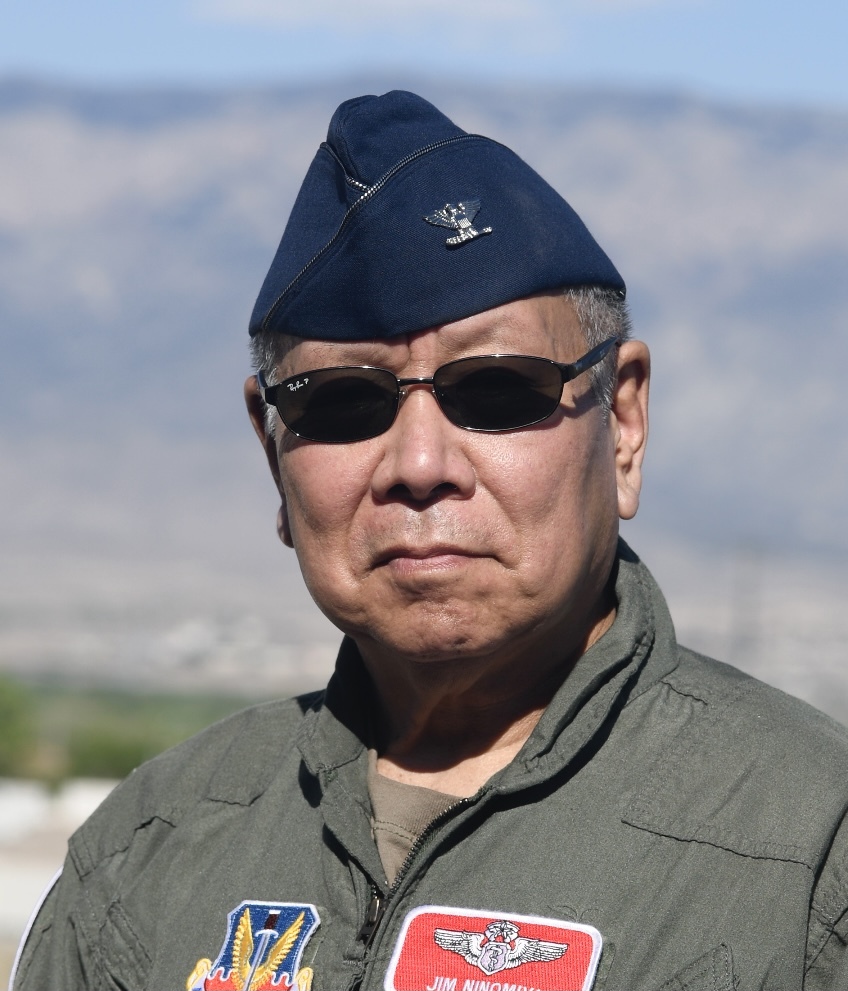
For Jim Ninomiya, his interest in photography started during high school, where his father introduced him to working in a black and white darkroom. As Japanese Americans, his father and their family were interned in a camp in Granada, Colorado during World War II. They lost their house, car, and were only allowed to bring whatever they could carry in a suitcase. Despite this treatment, the camps developed into communities, with little league, schools, the arts, and even newspapers. As a designated camp photographer Jim’s father was allowed to have and use a camera, which although heavily censored, captured the daily life in the camps.
Many of the camp inhabitants volunteered to serve in the military, where a segregated unit of Japanese Americans became the highest awarded unit of its size during the war. Being fluent in Japanese Jim’s father was part of the Military Intelligence Service, which was a predecessor to the CIA. His assignment was to travel across the Pacific by submarine and then enter Japanese held territory by rubber raft to spread information that the war was nearly over and the civilians would be treated fairly by the American forces. As the end of the war approached the mission was scrubbed, and he was later assigned to interrogate the civilian population on the effects of the atomic bomb, where he later spoke of horribly burned people and images of twisted rails from the trains that looked like skeletal remains reaching toward the sky.
His father’s experiences during and after the war inspired Jim to pursue his interest in photography, but more importantly were a factor in his decision to serve in the Air Force. He says that by serving in the military he hoped it might help to protect the freedoms that were lost to his father and many others during the war.
Jim was the first in his generation and family to graduate from college, and this interest in learning and his natural curiosity prompted him to pursue a career in medicine and specifically as an orthopaedic surgeon. Despite the many long hours of training, the ability to help people immediately through surgery has been immensely satisfying, and he has spent most of his career in academic medicine as a surgeon, professor, and running a molecular biology lab. He feels that teaching others will help to pass on the values and commitment to the next generation of orthopaedic surgeons and physicians.
Throughout his training and career as a physician and as a flight surgeon in the Air Force Jim has always seemed to have a camera with him. He says that having a camera enables him to stop and savor a moment during otherwise hectic days and has allowed him an opportunity to connect with other people outside of work. From his perspective, photography has given him many opportunities to explore the environment, culture, and people that he has encountered, and has provided many wonderful life experiences.
Years ago, he was invited to speak as a visiting professor in New Mexico, which started his connection with the geography, culture, and wonderful climate in the state. After several years of spending holidays in Santa Fe he was recruited to become a faculty member at the University of New Mexico as a professor and orthopaedic surgeon, and this prompted his move from Wisconsin. This ended up being a wonderful gift, where he was able to continue the traditions of photography taught by his father while still being able to serve in the Air Force while also working as a professor and orthopaedic surgeon.
He feels fortunate to be able to explore the richness of life in New Mexico including the land and culture and hopes to continue as a lifelong learner and explorer of our wonderful state.