Tom Samet and the Gardeners’ Fair: Preserving Place, Inspiring Generations
From childhood afternoons at Westbury House to co-chairing one of the village’s most anticipated philanthropic events, Tom Samet shares how beauty, stewardship, and community intertwine to keep Old Westbury Gardens vibrant for everyone.
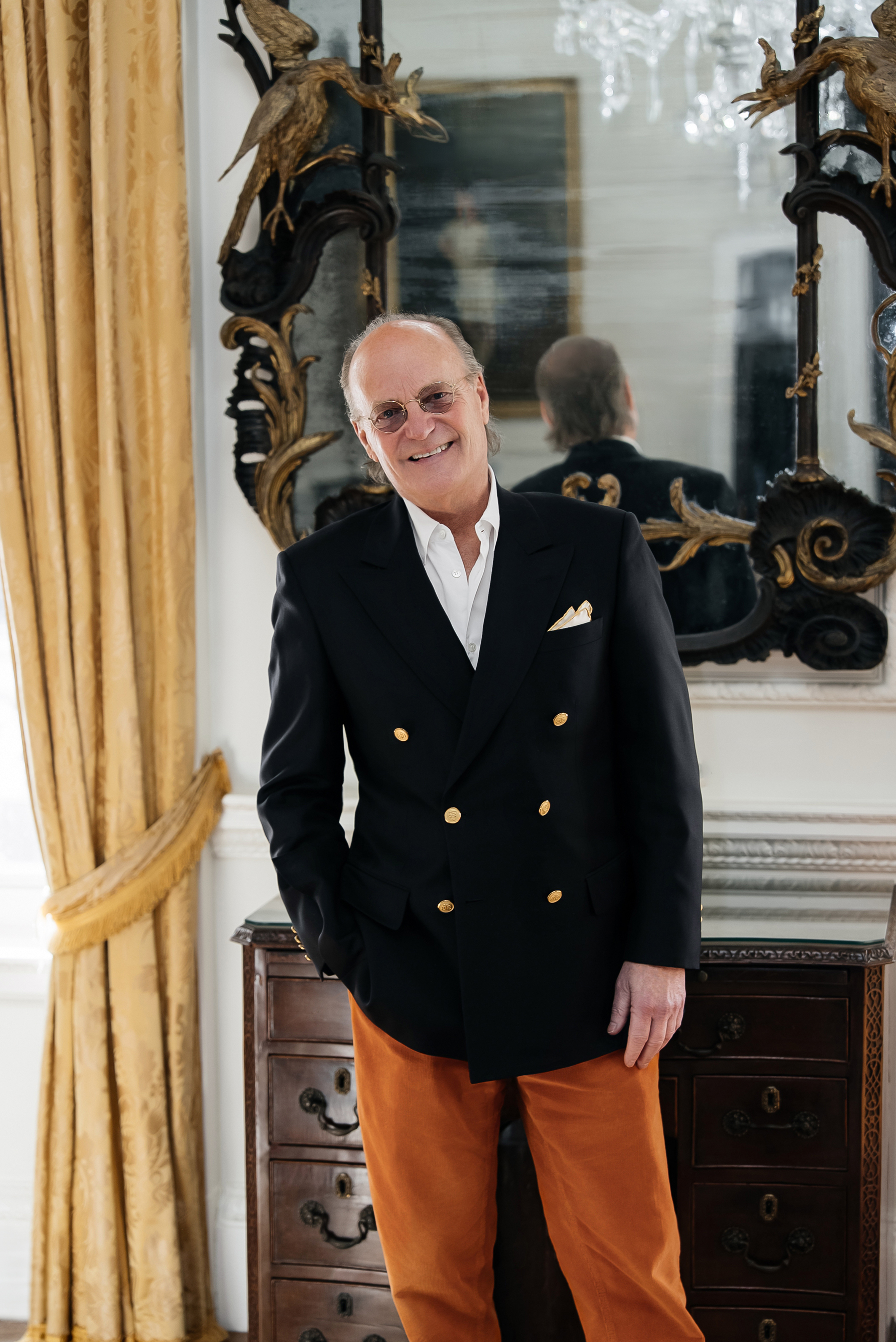
As I pull up to Westbury House to meet Tom Samet, I am struck, as I always am, by its quiet grandeur. It must be the hundredth time I have made this approach, just a stone’s throw from where I grew up on Terrace Court, yet the feeling never dulls.
There is a moment, just after you pass through the gates of Old Westbury Gardens, when everything softens. The long tree-lined drive acts as a gentle reminder that you are now entering a truly special place. Then you see it - the iconic stately mansion that was once a family’s treasured home.
Tom steps out of his classic Mercedes station wagon and pauses, taking it in as if for the first time. Before greeting me, he lifts his phone to capture the façade up close, proof that even after a lifetime here, the Gardens still has the power to stop you mid stride.
“When you come through the gates here, time stands still,” Tom told me as we sat overlooking the grounds. For Tom, that feeling began in childhood.
Long before he became co-chair of the upcoming Gardeners’ Fair, the man whose name is synonymous with North Shore design was simply a boy from Bacon Road raised in a village that felt more countryside than suburb.
“It was country-fied,” he said. “Open land. Rolling lawns. The most gracious place I could ever remember.”
A Village of Horses and Open Roads
Old Westbury in the 1950s and 60s was defined by space. There were horse farms everywhere. Two rail fences lined the roads. You could drive past properties and see horses grazing in open fields. It was known as an equestrian town, home to polo players, private riding trails, and estates that felt almost pastoral despite being a direct line to Manhattan.
Many residents commuted into the city each day, but the village retained a gentility that Tom insists was different from anywhere else. “You could go to Greenwich or Rye or Westchester,” he said. “But there was nothing like Old Westbury.”
The houses were set back on large parcels. The roads wound naturally through the land. This character was not accidental. Rather it was shaped quite intentionally.
His mother was part of that shaping. Serving on the village’s architectural review board during a period of heavy development, she was known for being hands-on. She walked properties when plans were submitted. She pushed for winding roads instead of straight cut throughs. She required green belts so houses would not be dropped squarely in the center of every two acre parcel and she advocated for scale restrictions so new homes would not overwhelm their surroundings.
As a child, Tom rode along with her to site visits. He watched her step out of the car and study the land before a single foundation was poured. “There’s no question those things trained my eye,” he said. “I’m still an updated traditionalist. I still care about how a gate looks. How a driveway curves. The end of a driveway matters.”
That aesthetic awareness is not simply about beauty. It is about preservation.
Everyone’s Weekend Home
If you ask Tom what makes the Gardens different from other historic estates, he does not talk first about architecture. He talks about feeling. “It’s everyone’s weekend home,” he said.
He remembers visiting as a child, when the lawns were alive with neighbors and friends. Women in Lilly Pulitzer dresses strolled past booths and games, while music floated through the air. Three generations would gather at once - grandparents, parents, children - all sharing the same space.
There were the famous “Picnic Pops” - evenings of classical, big band, jazz, and classic rock tribute performances, with families gathered on chairs and blankets, soaking in the magic of the Gardens. Tom even made the cover of the entertainment section of The New York Times in 1990 for a picnic he hosted on these very lawns and if you ask him today, he’ll tell you he’d love to bring Picnic Pops back for just one night. In fact, don’t be surprised if he’s the one to spearhead a one-time return.
The property itself has long drawn the spotlight. Films have used Westbury House as a backdrop. Fashion shoots have unfolded on its terraces. Presidents and dignitaries have attended private events here. Yet somehow, despite its fame and glory, it has always belonged to the community.
Its significance to the community is seen today: families lounging on the lawn, children racing toward the fountains, teenagers posing at the Temple of Love, and busloads of students arriving for educational programs that introduce them to art, horticulture, and history they might not otherwise experience.
That, Tom insists, is the real purpose behind the Gardeners’ Fair. To ensure its magic remains for those yet to come. I understand that instinctively. I grew up here, too. My father loved to take me to the Gardens as a child and walk the grounds with me. I remember thinking how extraordinary it was that this existed in our backyard. Now I bring my own children and watch them look at me the way I once looked at my father. There are not many places where that continuity still feels intact.
Reimagining The Gardeners’ Fair
As co-chair of this year’s Gardeners’ Fair at Old Westbury Gardens, Tom isn’t looking to recreate the past exactly as it was. He wants to honor it and gently refresh it. “I’m bringing whimsy and romance,” he said. When he first talked about co-chairing, Frank Sinatra happened to be playing in the background. The idea of dancing under the moonlight came quickly.
He shares that vision with co-chair Terri Keogh, whose role this year carries special significance. The evening will honor Bernadette Castro, Terri’s mother and a lifelong advocate for protecting open space, historic landmarks, and the character of communities across New York. Having her daughter help lead the celebration adds a quiet layer of meaning. Preservation, after all, is rarely the work of one generation alone.
The funds raised at the Gardeners’ Fair will help sustain not only the preservation of Westbury House and its formal gardens, but also the educational programming, horticultural stewardship, and community events that keep the property vibrant year-round (see sidebar).
For Tom, stewardship isn’t abstract. Old Westbury became what it is because residents chose to protect it. He saw that firsthand, riding alongside his mother as she walked properties to ensure new construction respected the character of the village. The Gardens were part of that same responsibility. They were the shared front lawn, the setting for concerts, celebrations, and quiet Sunday afternoons. But more than that, they were proof that when a community decides something is worth keeping, it lasts.
Now Tom stands on that same grand lawn helping to carry it forward. The funds raised don’t just preserve a landmark for those who grew up here. They open the gates to busloads of schoolchildren discovering art, architecture, and horticulture for the first time. They support the gardeners who tend the roses and the educators who lead tours. They ensure this cultural treasure remains not only pristine, but accessible.
Supporting the Gardens isn’t about holding onto the past. It’s about making sure the next generation gets to have one of their own.
**SIDEBAR 1**
The 2026 Gardeners’ Fair
AT A GLANCE
- Theme: “Dancing Under the Moonlight”
- Co-chairs: Terri & Peter Keogh and Tom Samet & Nathan Wold
- Entertainment: Jarrell Entertainment
- Catering: Sterling Affairs
- Auctions: Silent and live auctions
FUNDS RAISED THROUGH THE GARDENERS’ FAIR SUPPORT:
- Historic Preservation & Conservation: The Gardeners’ Fair proceeds help ensure the long‑term stewardship of the estate’s historic properties and landscapes, including:
- Ongoing care and restoration of the Westbury House, its interiors, architecture, and collections of period furnishings and art.
- Preservation of the formal gardens, woodlands, ponds, and lakes that make up 200+ acres of historic grounds.
- Support for current and future restoration projects of specialty garden features and hardscape elements.
- Educational Programs & Outreach: Funds support a wide range of educational offerings that turn the Gardens into a living classroom:
- School Group Programs
- Guided tours tailored to New York State learning standards in science, art, history, and more.
- Themed lessons for different age groups focusing on nature, plant science, ecosystems, architecture, etc.
- Outreach & Library Programs
- Programs brought directly to schools and libraries that introduce children to environmental science.
- Horticultural Initiatives: Gardeners’ Fair proceeds help support:
- Planting, pruning, and care of the historic gardens and landscapes
- Maintenance of seasonal blooms and specialty garden areas
- Horticultural demonstrations and hands‑on workshops for visitors
**SIDEBAR 2**
Bernadette Castro: Gardeners’ Fair Honoree
Bernadette Castro will be celebrated at next month’s Gardeners’ Fair, honoring a lifetime of leadership, preservation, and civic impact. From transforming New York’s parks to working alongside George Pataki to protect one million acres of open space (an ambitious initiative he championed and a highlight of her 12 years serving in his Cabinet), her vision and leadership have left a lasting imprint on the state’s landscapes and communities.
Bernadette first captured public attention as “the most televised child in America,” starring in legendary Castro Convertible commercials, and later charted a Billboard single as a teenager. She went on to lead Castro Convertibles before serving 12 years as New York State Commissioner of Parks, Recreation and Historic Preservation, pioneering public-private partnerships that revitalized the park system. She also made history bringing the U.S. Open to public Bethpage Black and served on PGA advisory committees for major championships. At the federal level, she was Vice Chair of the Advisory Council on Historic Preservation.
Today, she continues to guide Castro Properties while supporting organizations including Old Westbury Gardens and The Interfaith Nutrition Network. The Gardeners’ Fair honor celebrates a remarkable career defined by vision, leadership, and a lifelong commitment to preservation.