An Architectural Stroll Through Hayes Barton: A Modern Mind in Traditional Dress
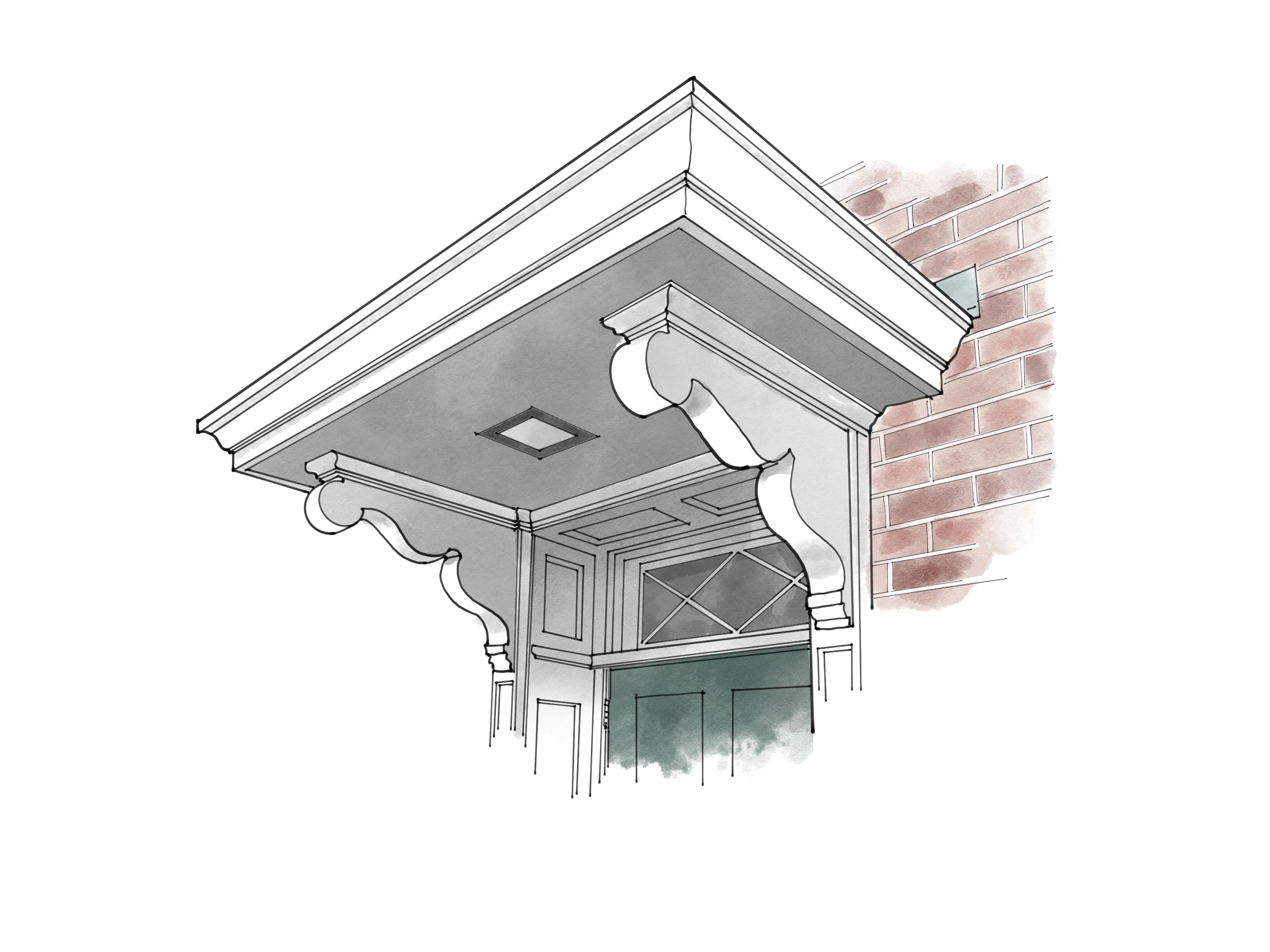
In our previous strolls, we explored the grand theatricality of revival architecture—from the Colonial splendor of the Mount Vernon House to the storybook charm of the French Norman style. But as a new world emerged after World War II, a new aesthetic prioritizing function and modern living began to appear. The home we visit today is a beautiful synthesis of these two worlds: The Anna Riddick House at 1028 Cowper Drive.
A House for Entertaining
Built in 1952 for prominent Raleigh interior designer Anna Riddick, this Georgian-revival house is distinctive for several reasons, including its client: a single professional woman working in the South in the 1950s. Riddick, working with New York architect William Dewey Foster, sought to design a unique space that served as both “a one-person dwelling and a place for large-scale entertaining.”
The house broke with the sprawling suburban ideal of the time (e.g. the typical 1950s ranch house). Instead, it adopted a narrow, townhouse-like footprint on a corner lot, focusing its attention on precise detailing and the inventive use of its small footprint.
But the true genius of the design lies in how the house interacts with and morphs into its surrounding pierced-brick walls. The walls extend from the house like encircling arms, enclosing a series of terraces that act as a second skin around the dwelling. These walls don't just provide privacy; they define a collection of outdoor rooms, transforming the compact home into a much larger space tailored for entertaining. Guests could spill out from the house on all sides, while still maintaining a sense of intimacy behind the privacy of the walls.
Counter-balancing the modern form of the house is an imbued sense of history, starting with Riddick’s utilization of salvaged materials. The house features bricks from the former Oddfellows Orphanage in Goldsboro, NC, and heart pine flooring recovered from a demolished section of Dorothea Dix Hospital.
Architecturally, the form is crisp, clean, and historically-minded: clipped eaves land cleanly on a brick dentil course, creating a tight, highly-detailed profile. This geometry feels authentic to the refined Colonial architecture of Tidewater Virginia and North Carolina, yet plays perfectly with the modern, efficient plan hidden beneath the surface.
A Modern House Hiding in Plain Sight
At first glance, the Anna Riddick House is simply a modest, attractive brick house on a suburban corner. But upon closer inspection, it reveals an inventive urban form that prioritizes function, efficiency, and outdoor living.
This house is a fascinating illustration of a modern plan hiding in plain sight. It achieves its elegant form by sacrificing size for intentionally-designed spaces. It’s a sophisticated, site-specific solution that stands as a quiet masterpiece of Raleigh’s architectural history.
Next month, we will continue our stroll through Hayes Barton by looking at a house very similar in background to 1028 Cowper, but with a much different street presence: 1001 Cowper Drive.
Robert Cox is a residential architect and Hayes Barton resident. If you see him out walking, say hello!
To learn more about the history of Hayes Barton, check out:
- Hayes Barton at 100, by Terry Henderson