A Little Help for Our Friends
Hello neighbor and happy new year! By now, you’ve hunkered down in the armchair with a sigh
and a seed catalog. You’re not the only one dreaming about seeds. Look out the window. That
chirping chickadee is singing the blues if you haven’t left some perennials standing with seed
pods. That goldfinch is hoping you planted shrubs with berries. Those bluebirds have been
blown off course in our latest storm and are searching for shelter. And all of our feathered
friends are thirsty.
Don’t put your feet up yet, my friend. Our feathered wildlife especially need our help in the
winter months. Food becomes scarce, weather conditions become severe, and water sources
are frozen. You can increase birds’ survival rates with a few simple steps. Choosing high fat
options for feeding such as nuts, suet and unsalted peanut butter amps up the calories for
these little guys. One of the most popular options to feed them is black oil sunflower seeds and
mealworms are especially high in nutrition.
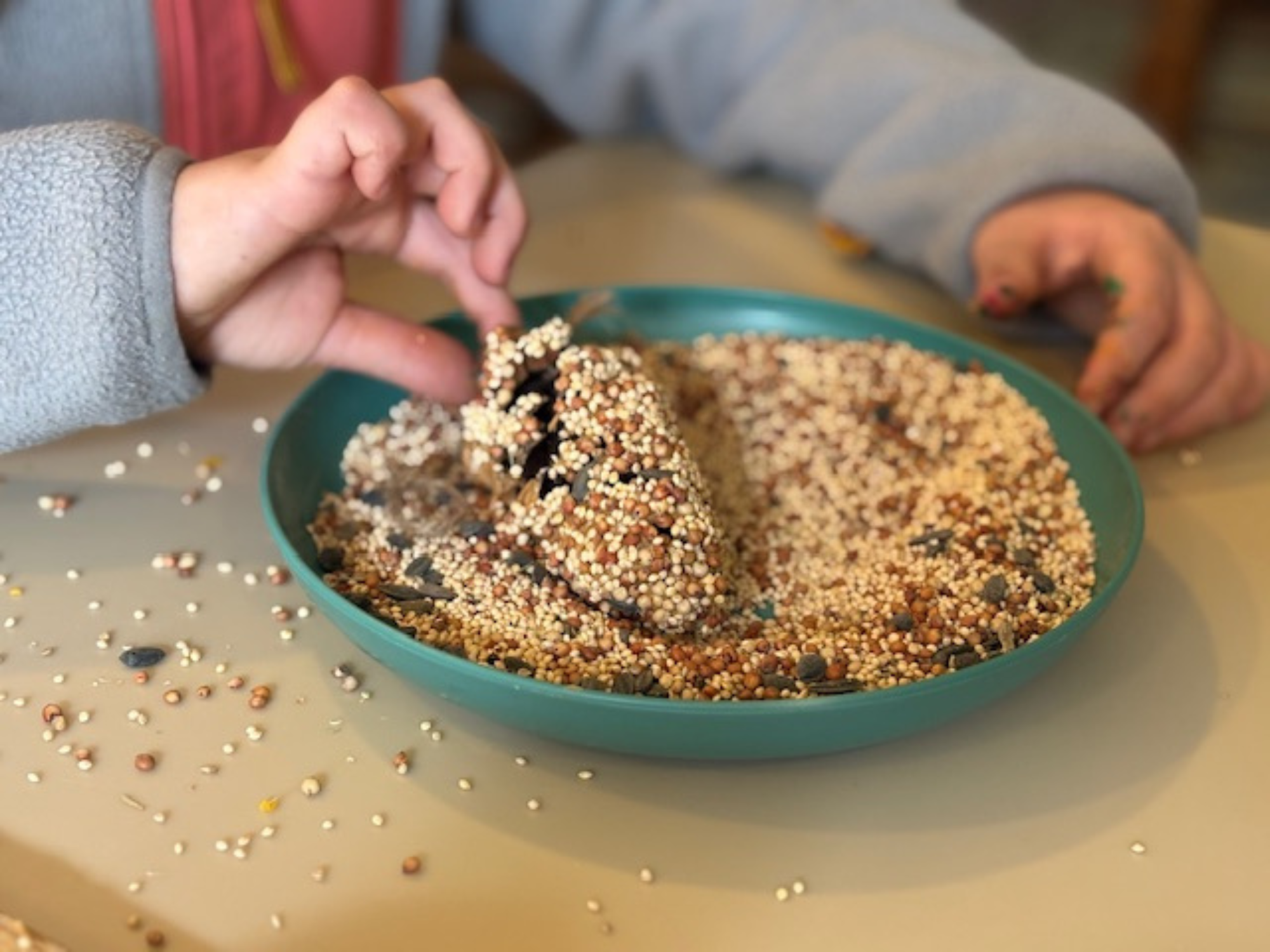
I know you woke up today thinking, “today’s the perfect day to make bird cookies!” Lucky for
you that I have a recipe for that and it’s easy peasy. Mix 7 grams of unflavored gelatin with ¼
cup water. Mix in birdseed. Push into cookie cutters. I usually let the whole concoction dry and
then push a needle through with some heavy thread to hang it. You can also push a straw
through to make a hole for yarn. Importing a child for this activity ramps up the excitement and
the birdseed sprinkled throughout your house.
Another easy natural birdfeeder is to slather pinecones in unsalted peanut butter, then roll
them in a bowl of seeds. Attach to a tree with yarn. If you thought it was fun to do the previous
bird cookie with kids, you can imagine the joy when you add peanut butter to the mix!
My very favorite homemade birdfeeder, however, depends on my husband’s love of citrus
fruits in the winter. My granddaughter and I steal his empty orange halves. We punch 4 holes
around the rim. A skewer works well for this. We fill the bowl with peanut butter, then smash
as much birdseed as we can on top. You’ll probably know enough to wash your hands before
then trying to string the yarn through the holes for hanging. In my own defense, I got distracted
by the nine year old trying to taste the seed. By the time the shrieking stopped, we both were
coated in peanut butter and I’m pretty sure I had seed up my nostrils. My husband vowed to
stop eating oranges. I’m sure your experience will be more sedate.
Feeding birds in winter provides those important calories to help them conserve energy and
stay warm, but actually, dehydration is a bigger threat than starvation. Without access to
water, they can’t do a thorough job of preening, which affects their insulation. They lose body
heat. This affects mortality rates. Googling “electric or solar bird baths” will give you lots of
options. You can even simply buy a heating element to put into your existing birdbath. Or, just
put out a shallow bowl of water every day.
With fresh seed put out and a warm birdbath up and running, the birds will be better prepared
for spring breeding and you know what that means: avian party time in your yard come spring!
Now pour yourself that cup of tea and settle in to watch the busy, joyful activity out your
window. I’m off to scrape the last of the peanut butter out of the carpet!