A Surgeon’s Desire to Help
Dr. Alan Bradshaw’s impact on Mission Health and Biltmore Park
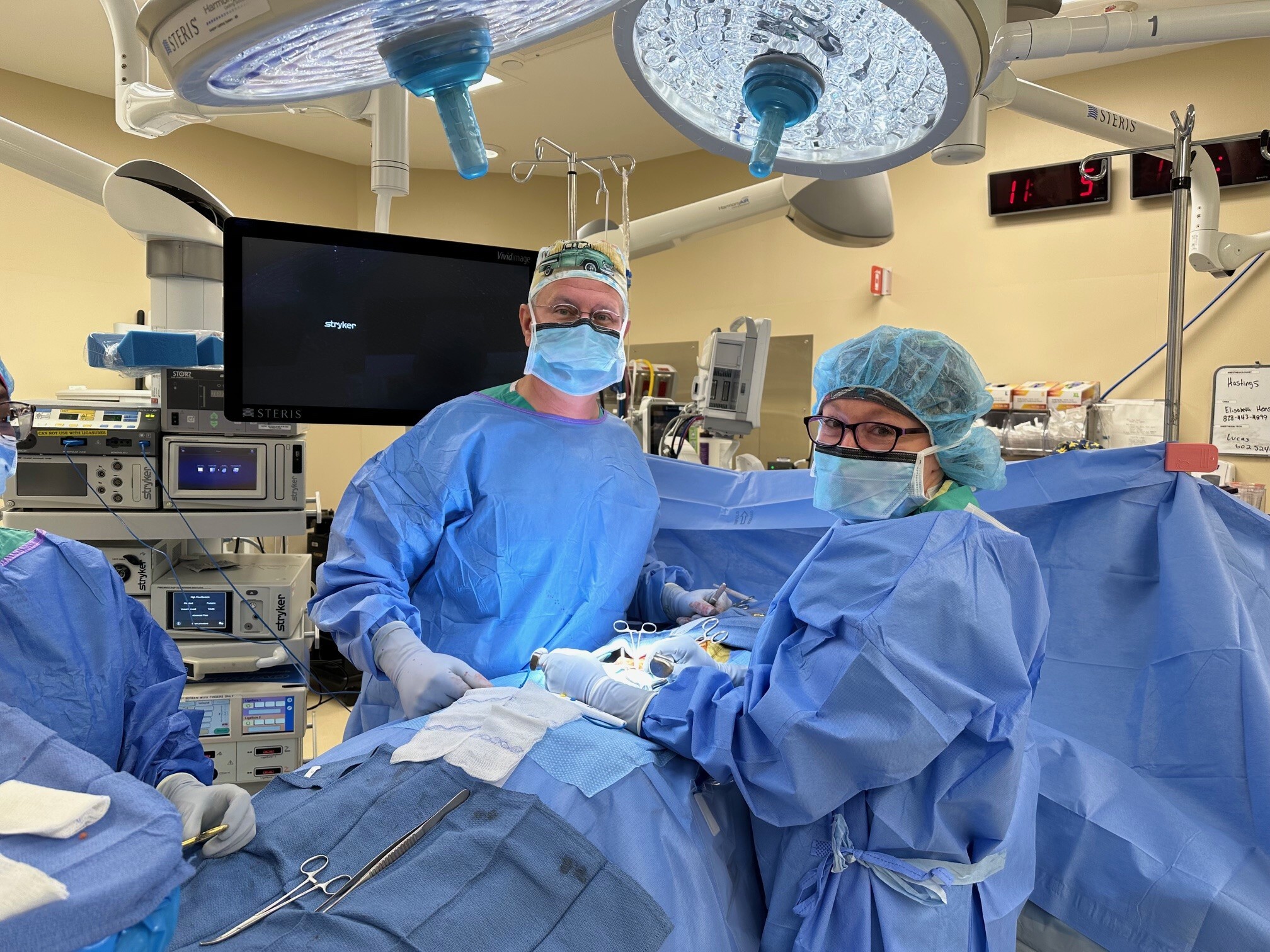
For Dr. W. Alan Bradshaw, medicine was never just a career choice, it was a calling shaped by generations before him.
Raised in Texas, Dr. Bradshaw comes from a long line of physicians. His father, grandfather and great-grandfather all practiced medicine before him, giving him an early and meaningful glimpse into the relationships physicians form with their patients and communities. That legacy planted a seed, and his own experiences ultimately confirmed his path.
While attending the University of North Carolina at Chapel Hill as an out-of-state student, Dr. Bradshaw initially entered the business school before realizing he wanted something more personally meaningful. He shifted to the pre-med track, immersing himself in Spanish, chemistry, and volunteer work in the emergency room — a combination that solidified his desire to help people and tested his abilities in a rigorous, purpose-driven field. Returning to his home state at Texas A & M Health Science Center College of Medicine, he initially expected to pursue family medicine, but everything changed during his first general surgery rotation.
“I loved identifying a problem and fixing it,” he says. “I also love spending time with patients and the technical aspects and advances in the field of medicine.”
Technical precision paired with human connection became the foundation of his career. Dr. Bradshaw completed his general surgery residency at UNC-Chapel Hill and went on to fellowship training at Emory University, where he trained during a pivotal time in the evolution of laparoscopic surgery.
In the spring of 2001, while finishing his fellowship at Emory University, Dr. Bradshaw and his wife Kellye made a life-defining decision. Driving home from work, he saw a simple message on a billboard: “Come to Asheville.”
The idea resonated. Kellye had grown up in nearby Candler, and the couple was already thinking about where they wanted to raise their young family.
Asheville checked every box.
They moved that summer, just as Dr. Bradshaw completed his fellowship, he began what would become a 25-year (and counting) career at Mission Health/HCA.
Over the years, Dr. Bradshaw has become a central figure in the hospital’s surgical program. His expertise spans colon and hernia surgery, minimally invasive procedures, bariatric surgery, and advanced reflux treatment. He also played a key role in developing and expanding bariatric surgery services, working over the course of a year to build a program that would reduce complications and better serve patients.
As technology advanced, he helped lead the integration of robotic surgery at Mission, contributing to what is now one of the busiest robotic surgery programs in the state. His work continues to evolve with innovations such as single-port robotic techniques, which allow surgeons to operate through a single small incision for improved patient outcomes.
In addition to his clinical work, Dr. Bradshaw serves as medical director of Mission Surgery and previously held the role of chief of surgery. His leadership extends beyond the operating room, helping shape systems and teams that care for patients across Western North Carolina.
He remains deeply involved in education as well, working with surgical residents through the MAHEC residency program, as well as medical and physician assistant students. Teaching, he says, is one of the most rewarding aspects of his career.
Helping young physicians develop the discipline, preparation, and habits necessary for a balanced and effective career is something he takes seriously, especially as the profession and culture evolves to emphasize wellness alongside excellence.
That balance has been something Dr. Bradshaw has worked to model in his own life, particularly as a husband and father.
The Bradshaw family settled in Biltmore Park in 2001, long before the retail and development that define it today. What drew them in was simple: proximity to schools, the hospital, and a neighborhood where their children could grow up actively and safely.
Their home on Crocus Lane became a hub of family life, a place where bikes filled the driveway, basketball games were played out in the front yard, and neighbors became lifelong friends. Many of his colleagues live in the neighborhood.
Much of their social life revolved around their children’s activities, from travel soccer and basketball to swim team and track. Dr. Bradshaw made a conscious effort to protect time for those moments, often ensuring at least one night each week when he would not be on call.
“You have to have your priorities,” he said.
That meant sometimes needing to leave a game or practice for a patient emergency, but also being fully present whenever possible. He credits his wife, Kellye, with much of their success in raising their children.
Today, that investment in family is reflected in the paths his children have chosen. His son, William, (29), recently matched into residency at Wake Forest University School of Medicine, continuing the family’s legacy as a fifth-generation physician. His daughter, Edie, (24), followed her mother’s path into law school.
For Dr. Bradshaw, that legacy is both humbling and deeply meaningful.
Professionally, what continues to drive him is the direct impact he can have on patients’ lives. In cases like severe reflux disease, where symptoms can take over a person’s daily existence, the ability to intervene and resolve the issue is profoundly rewarding.
“When you fix it, and they tell you it’s gone, that immediate impact on quality of life is hard to describe,” he said.
That same sense of purpose extends to his role within Mission Health/HCA, where he works alongside colleagues across a multitude of specialties to ensure the community has access to comprehensive, high-quality care.
“It’s incumbent on senior physicians to make sure we have strong teams in every specialty,” he said, noting the importance of collaboration and shared commitment to patient care. “I also derive a lot of satisfaction in teaching these young people on how to be great physicians. To be dedicated and prepared with repetition, but also to take care of yourself and your family,” he says. “Surgeons traditionally don’t get enough sleep or nature, but these are good habits to establish at an early age.”
Outside of the hospital, Dr. Bradshaw finds renewal with an outdoor active lifestyle that first drew him to Asheville: hiking, mountain biking and skiing.
After more than two decades, his perspective remains one of gratitude.
“It’s been a great ride,” he said. “Biltmore Park is a great place to raise kids. We’re very fortunate to live where we live. Despite the difficulties of the past several years, our community is strong. It’s a real privilege to live here.”
For Biltmore Park, for Mission Health/HCA, and for the generations of patients and physicians he has influenced, Dr. Bradshaw’s impact is clear. His legacy is defined not only by surgical excellence, but also by his commitment to people, community and the enduring value of care given.