Wild Bird Research Group is studying owls in WNC with help from Little Bird Roofing Company
=
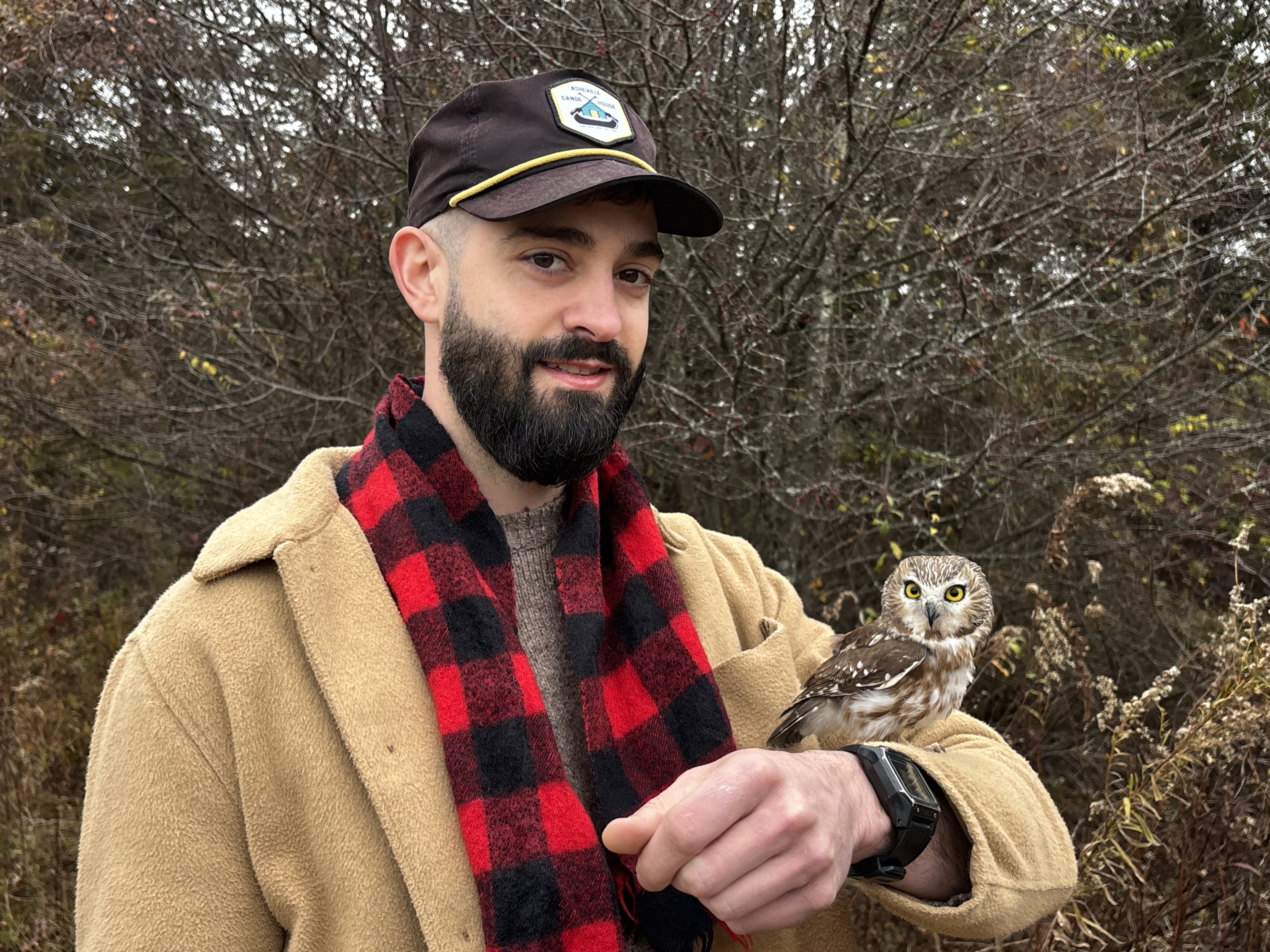
Anthony Squitieri of Little Bird Roofing is a certified home inspector and ecologist, specializing in complex roofing and wildlife relocation issues.
If you slow down long enough to notice them, birds start to tell a story. They show us where nature is thriving, where it’s under pressure and how closely our lives are tied to the world just outside our doors.
That’s the story behind the work of the Wild Bird Research Group (WBRG). At its heart, the organization exists to listen and to make sure those stories don’t disappear.
In Western North Carolina, that work is made stronger through a meaningful local partnership with Little Bird Roof Company, a Stroll business partner that is investing in WBRG.
Founded in 2011, WBRG focuses on studying bird populations and the habitats they depend on. Their work isn’t just about data, though; it’s about understanding how birds live, move and adapt in a world that’s constantly changing. Through field research, education and collaboration, they’re helping build a clearer picture of what birds need to survive.
Little Bird Roof Company plays an important role in that mission. The locally owned roofing business gives back 1% of its annual proceeds to support WBRG’s work, along with additional contributions to special projects. It’s a simple but powerful commitment, one that reflects a shared respect for the environment and the place we all call home.
While WBRG is headquartered in New Jersey, its reach extends far beyond. Researchers there study migratory patterns and seasonal behaviors, including tracking species like the northern saw-whet owl and the long-eared owl. Using tools like GPS and radio transmitters, they’re able to follow these birds in order to help guide conservation efforts across regions.
In 2018, that work expanded into Western North Carolina, rich in biodiversity and full of unanswered questions. The organization established a regional chapter here, even operating a bird banding station at the North Carolina Arboretum for several years. Today, that foundation continues, through ongoing research and community support.
One of the most fascinating projects happening right now focuses on the northern saw-whet owl. While most of these owls live and breed far to the north, a small isolated population calls the high-elevation forests of the Southern Appalachians home. These spruce-fir forests are among the most endangered ecosystems in the country, making the owls that live here (hundreds of miles from this species’ primary breeding range) even more important to understand.
What researchers don’t yet know is just as interesting as what they do. Do these owls stay here year-round? Do they migrate? If so, where do they go and what conservation measures do they need to survive? The project is still in its early stages, with funding, permits and training all coming together. Support from grants, donors and partners like Little Bird Roof Company is what makes this kind of research possible.
This partnership is a reminder that conservation doesn’t just happen in labs or forests. It happens when local businesses, organizations and communities decide to care and to act, protecting the landscapes and species that define our region.
When we protect birds, we’re really protecting the story of the place we live.
Go to wildbirdresearch.org to learn more.