Meet Your Neighbor: Dr. Marvin “Marv” Dickerson
A Life of Scientific Impact, Lifelong Curiosity, and Community Connection
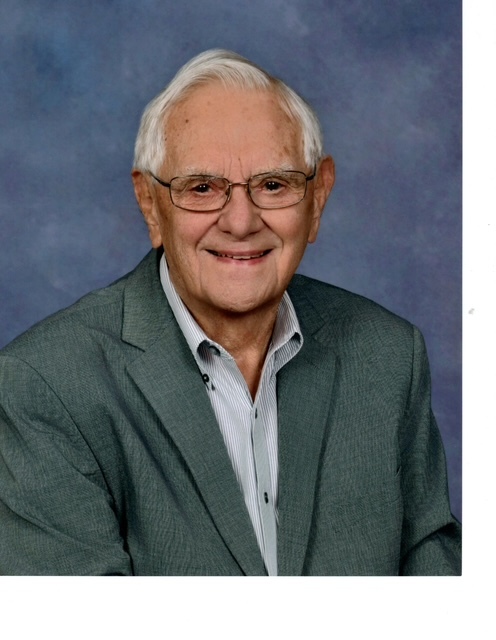
Residents at Bermuda Village know Marvin “Marv” Dickerson as the friendly, thoughtful neighbor who never seems to miss (a fitness class or) a chance to join a group activity. But beyond his easy smile and active lifestyle is a remarkable legacy in scientific innovation and national service—one that continues to benefit people around the world to this day.
Marv’s story begins in August 1934 in Fishersville, Virginia, a small Shenandoah Valley community nestled between Staunton and Waynesboro. After graduating from high school, he enlisted in the U.S. Air Force, an experience that sparked his fascination with science and the natural world.
Following his service, Marv attended East Tennessee State University, where he earned both bachelor’s and master’s degrees in mathematics and physics. He went on to teach at ETSU for eight years before pursuing a Ph.D. in meteorology at Florida State University.
In 1971, Marv accepted a research position at Lawrence Livermore National Laboratory (LLNL), just outside San Francisco. There he was tasked with developing a groundbreaking atmospheric tracking system that could model the behavior and effects of radioactive releases. The concept evolved into the Atmospheric Release Advisory Capability (ARAC), which played a critical role during the Three Mile Island nuclear accident in 1979.
As ARAC expanded into the internationally recognized National Atmospheric Release Advisory Capability (NARAC), Marv’s work connected him with scientists around the world. During the Chernobyl disaster in 1986, Marv’s team collaborated with Swedish researchers to trace the radioactive source before it was officially acknowledged, and this work helped shape global understanding of the event. April 26, 2026, will mark 40 years since the Chernobyl nuclear disaster, which happened on April 26, 1986. Many groups and organizations are planning commemorations, events, or reflections on four decades since the disaster and CNN will be running a documentary on the NARAC and other important organizations and scientists like Marv who helped make sense of the disaster. Today, NARAC still serves as a vital national resource, continuing the mission that Marv helped build.
Marv’s story begins in August 1934 in Fishersville, Virginia, a small Shenandoah Valley community nestled between Staunton and Waynesboro. After graduating from high school, he enlisted in the U.S. Air Force, an experience that sparked his fascination with science and the natural world.
Following his service, Marv attended East Tennessee State University, where he earned both bachelor’s and master’s degrees in mathematics and physics. He went on to teach at ETSU for eight years before pursuing a Ph.D. in meteorology at Florida State University.
In 1971, Marv accepted a research position at Lawrence Livermore National Laboratory (LLNL), just outside San Francisco. There he was tasked with developing a groundbreaking atmospheric tracking system that could model the behavior and effects of radioactive releases. The concept evolved into the Atmospheric Release Advisory Capability (ARAC), which played a critical role during the Three Mile Island nuclear accident in 1979.
As ARAC expanded into the internationally recognized National Atmospheric Release Advisory Capability (NARAC), Marv’s work connected him with scientists around the world. During the Chernobyl disaster in 1986, Marv’s team collaborated with Swedish researchers to trace the radioactive source before it was officially acknowledged, and this work helped shape global understanding of the event. April 26, 2026, will mark 40 years since the Chernobyl nuclear disaster, which happened on April 26, 1986. Many groups and organizations are planning commemorations, events, or reflections on four decades since the disaster and CNN will be running a documentary on the NARAC and other important organizations and scientists like Marv who helped make sense of the disaster. Today, NARAC still serves as a vital national resource, continuing the mission that Marv helped build.
Now enjoying life at Bermuda Village, Marv has been president of the condo HOA and leader of the condo maintenance team. He remains active in groups such as Wine Aficionados and several other community groups. He embraces everything Bermuda Village has to offer, bringing energy and enthusiasm wherever he goes.
Marv’s life is a testament to curiosity, service, and staying active—both in mind and body. Bermuda Village is proud to have him as a neighbor.
FUN Q & A WITH MARV:
What brought you to Bermuda Village, and what have you enjoyed most about living here?
Having grown up in VA and living in California for 38 years, I wanted to return to the Southeast. I looked around the Triad & settled on Bermuda Village over 16 yrs ago.
What are some of your favorite past-time/activities?
I play golf, weather permitting & I walk up to 3 miles a day. I enjoy leading the Wine Aficionados group at Bermuda Village.
What originally sparked your interest in science, math, or meteorology?
My physics & math teachers in high school got me interested in math & the sciences while flying lessons got me interested in Meteorology.
What do you remember most about the Three Mile Island response?
There was a lot of misinformation about how bad the accident was that we addressed with our computer model calculations along with measurements of the radioactivity.
What was it like collaborating internationally during the Chernobyl disaster?
It was very both challenging and interesting working with several countries on such a serious problem and developing a trust with our foreign fellow scientists.