Backcountry: Ranch to Community
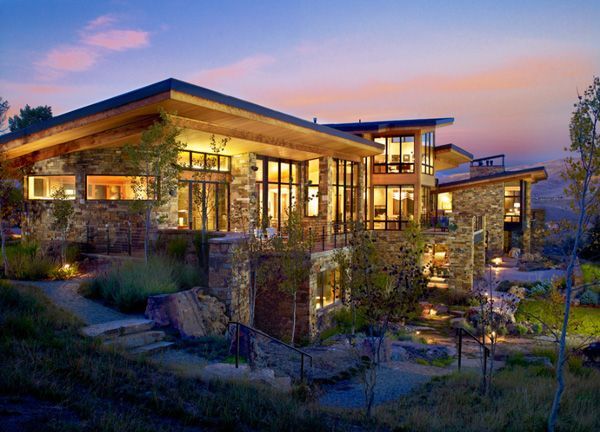
The Backcountry neighborhood and its corresponding Backcountry Wilderness Area represent a unique history in Highlands Ranch, Colorado. The story spans from 19th-century homesteaders and massive cattle empires to visionary 20th-century urban planning that ultimately preserved a "wild place" right on the edge of modern suburban development.
The Era of the Great Ranching Empires (1859–1970s)
Before it was a residential neighborhood, the land that makes up Backcountry was part of a sprawling 22,000-acre working ranch.
- The Homesteaders: In the mid-to-late 1800s, early settlers began filing land grants under the Homestead Act. Notable figures like Rufus "Potato" Clark (the "Potato King of Colorado") established roots in the area.
- The Springer Consolidation: In the 1890s, a wealthy political and banking figure named John W. Springer began buying up these smaller homesteads, consolidating them into the massive Springer Cross Country Horse and Cattle Ranch. He also began building what is now the historic Highlands Ranch Mansion.
- The Phipps Family & The Arapahoe Hunt: Over the decades, the land changed hands several times—including oil tycoon Waite Phillips (of Phillips Petroleum). In 1937, it was purchased by Lawrence Phipps Jr., whose family made their fortune in steel. For nearly 40 years, the "Phipps Ranch" operated as a vast cattle ranch and the premier headquarters for the Arapahoe Hunt Club, where horseback hunters chased foxes across the exact rolling hills where the Backcountry neighborhood and trails sit today.
The Master Plan and the "OSCA" Vision (1978–2000s)
When Lawrence Phipps Jr. passed away in 1976, the future of the ranch hung in the balance. It was briefly bought by oil baron Marvin Davis before being acquired by the Mission Viejo Company in 1978.
Mission Viejo had a radical, highly deliberate vision to build a master-planned community. Right from the start in the late 1970s and early 1980s, planners decided on a strict rule: two-thirds of the 22,000-acre property would be developed into housing, parks, and retail, but the remaining one-third—a contiguous 8,200-acre block on the southern boundary—would be conserved forever.
For nearly three decades, this massive southern swath of land was known as OSCA (Open Space Conservation Area). While houses rapidly sprouted in northern and central Highlands Ranch through the '80s and '90s, OSCA remained blocked off, used primarily for managed cattle grazing.
Shea Homes and the Birth of the Neighborhood (2000s)
In 1997, Shea Homes purchased the remaining undeveloped land and infrastructure of Highlands Ranch from Mission Viejo. As development pushed into its final phases toward the southern edges of the community, Shea Homes began designing the crown jewel of their residential offerings: a luxury, gated enclave built right against the rugged ridges of the conservation space, appropriately named Backcountry.
The neighborhood was envisioned to offer a resort-style Colorado lifestyle, anchored by a private lodge (The Sundial House), parks, and direct access to nature.
The Transition to a Community Wilderness (2006–Present)
The agreement forged decades prior stated that once Highlands Ranch reached 90% "build-out," the developer would hand the 8,200 acres of protected open space over to the residents via the Highlands Ranch Community Association (HRCA).
- 2006: Shea Homes handed over the management of the 811-acre Wildcat Mountain area to the HRCA. This allowed volunteers and trail builders to construct the very first singletrack trail systems on the property.
- 2009: The transition became official. Shea Homes conveyed the entirety of the land to the HRCA, and the space was officially renamed the Backcountry Wilderness Area.
Because the land was handed over to a community association rather than a public county park system, it created a unique dynamic. The HRCA designed a management plan focused heavily on ecological preservation. To prevent human activity from pushing out local wildlife, the majority of the human footprint is concentrated in less than 100 acres (near the Backcountry Base Camp off Grigs Road). The remaining thousands of acres serve as a crucial, untouched habitat for thriving populations of elk, mule deer, black bears, and birds of prey.
Backcountry Today
The luxury neighborhood has grown into one of the most sought-after gated communities in the Denver metro area, defined by its architecture and striking views of the Front Range. Meanwhile, its backyard—the Backcountry Wilderness Area—has evolved into a massive outdoor hub featuring over 26 miles of private natural trails, an outdoor archery range, equine programs, and "Camp Backcountry" for local youth.