A Neighborhood Born in the Streetcar Era
Long before traffic and tailpipes, Ansley Park grew to the rhythm of steel wheels on steel rails.
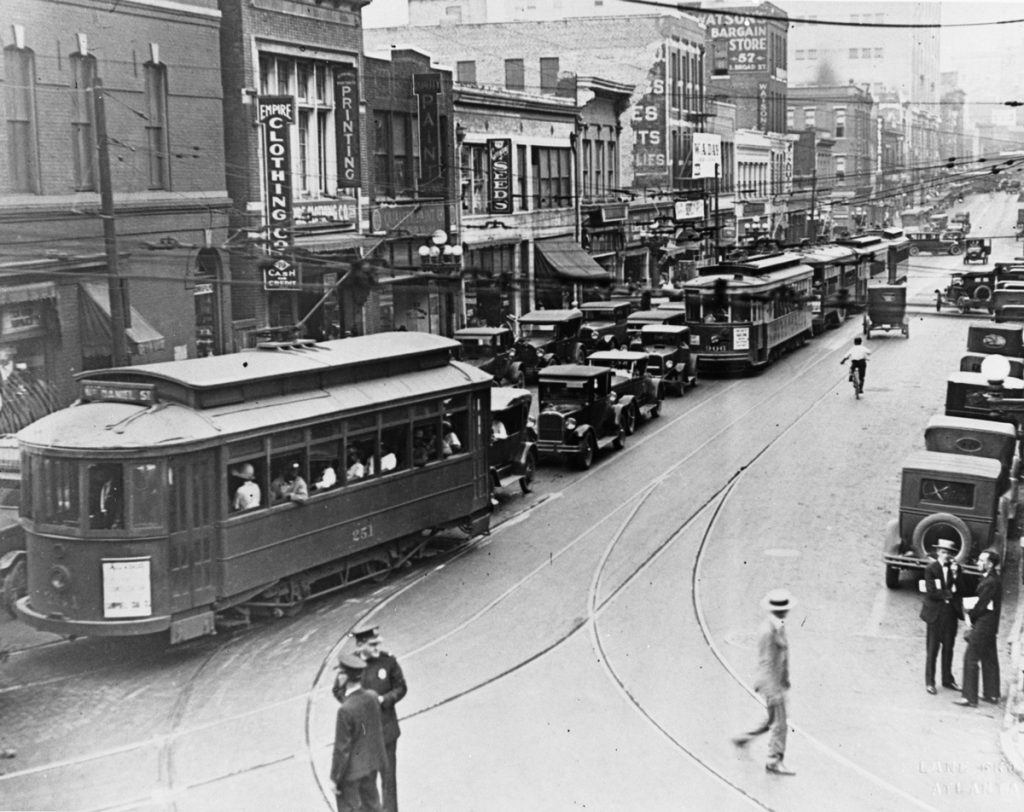
Long before garages and traffic circles defined daily life, Ansley Park grew up to the steady hum of streetcars gliding along nearby corridors. In the early 1900s, electric trolleys were Atlanta’s most modern form of transportation, and they played a decisive role in transforming Ansley Park from wooded land into one of the city’s most desirable residential enclaves. These early transit lines did more than move people—they shaped how the neighborhood was planned, populated, and connected to the city beyond.
From Front Porch to Downtown—All by Trolley
When developer Edwin P. Ansley began envisioning the neighborhood, Atlanta’s streetcar network was already radiating outward from downtown. Lines operated by the Atlanta Railway & Power Company ran along major corridors like Peachtree Street, placing Ansley Park just minutes from the city’s commercial and cultural heart. For residents, this meant the best of both worlds: leafy streets and gracious homes paired with a reliable, predictable commute.
Residents living near what we now know as Peachtree Circle or 15th Street could walk a few blocks, step onto a trolley, and be downtown in time for work—or a matinee—without ever touching a steering wheel. On quiet mornings, the soft clang of the trolley bell could drift through open windows and front porches, a gentle reminder that the city was close, but not intrusive.
Streetcars as Social Spaces
Streetcars weren’t just transportation; they were shared social spaces. Neighbors rode together each morning, newspapers folded under arms, exchanging greetings and news of the day. Children gained early independence by riding the trolley with friends, while weekends brought leisurely trips downtown for shopping, theater performances, or an afternoon at Piedmont Park.
Imagine a well-dressed family boarding an open-air car on a Saturday afternoon—parents seated, children wide-eyed as the neighborhood slipped past—headed toward the bustle of the city. These everyday rituals stitched Ansley Park into the broader rhythm of Atlanta life.
Designing a Neighborhood Around the Rails
The influence of the streetcar extended beyond commuting habits and into the neighborhood’s physical design. Homes were intentionally arranged along curving, walkable streets that naturally led toward transit routes. Commercial activity clustered near streetcar stops, while interior streets retained their quiet, residential character.
While streetcar lines didn’t run directly through Ansley Park’s interior streets, nearby routes along Peachtree Street and surrounding corridors made the neighborhood easily accessible on foot. Long before “transit-oriented development” became a planning buzzword, Ansley Park was already living it.
When the Rails Disappeared—and What Remains
By the mid-20th century, automobiles began to eclipse streetcars, and Atlanta’s trolley lines were gradually dismantled. Tracks were paved over, and the familiar bells fell silent. Yet the framework they created endured. Ansley Park’s walkability, proximity to Peachtree Street, and enduring sense of community all trace back to those early years on the rails.
Why This Story Still Matters
As Atlanta once again debates transit, density, and walkable neighborhoods, Ansley Park’s streetcar roots feel remarkably current. The neighborhood stands as proof that thoughtful connections—between home and city, neighbor and neighbor—can shape daily life for generations. Next time you stroll beneath the canopy of mature trees, imagine the gentle rumble of a trolley just beyond the hedges, carrying neighbors home.